
Smuggling Ring of 200 Cobras and Crocodiles Busted... Mastermind in 20s Detained and Indicted, 4 Others Tried Without Detention
A smuggling ring that trafficked 200 wild animals, including cobras and crocodiles, from Indonesia, Vietnam, and Thailand and distributed them nationwide has be
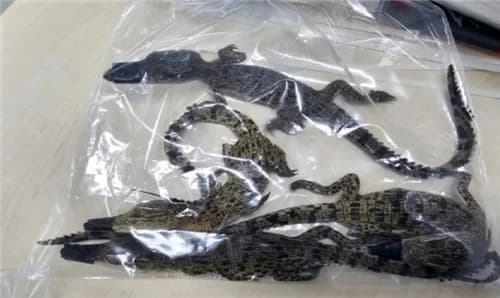
A smuggling ring that trafficked 200 wild animals, including cobras and crocodiles, from Indonesia, Vietnam, and Thailand and distributed them nationwide has been busted. The haul included 54 internationally endangered species, and the distribution of highly venomous cobras in residential areas and near schools has caused social shock.
Smuggled 14 Times... Juvenile Crocodiles Bound at the Mouth and Hidden in Underwear The Seoul Eastern District Prosecutors' Office Criminal Division 2 (Chief Prosecutor Lee Seung-hak) indicted the ring's mastermind, identified as A (in his 20s), on charges of violating the Customs Act, the Wildlife Protection and Management Act, and the Act on the Aggravated Punishment, etc. of Specific Crimes (brokerage bribery). Four other members were also referred to trial without physical detention.
The ring was composed of men in their 20s and 30s. According to investigations, they smuggled 200 animals, including cobras, Yangtze River alligators, and black pond turtles, from Indonesia, Vietnam, and Thailand in 14 separate instances between November 2023 and June 2024. They are also accused of distributing these animals domestically on 19 occasions, including 54 internationally endangered species. Transaction prices ranged from hundreds of thousands to tens of millions of won.
Their smuggling methods were meticulous. Juvenile crocodiles had their mouths bound, and lizards were placed in plastic containers or metal cookie tins and loaded into aircraft cargo holds. Some animals were hidden in underwear and brought into the cabin. It was confirmed that a significant number of animals died due to prolonged transport and tight packaging.
Advertised with Slang on Online Cafes... Delivered Nationwide via Express Bus Parcel To evade customs crackdowns, they posted advertisements on online reptile cafes using slang. Once a deal was struck, they used express bus parcel services to deliver the animals to various locations across the country.
Prosecutors also revealed that a Siamese crocodile found in the Soyang Stream in Yeoju, Gyeonggi Province; an exotic snake that appeared in an apartment complex in Yangju, Gyeonggi Province; and the carcass of a saltwater crocodile found on a road in Sacheon, South Gyeongsang Province, were all species smuggled by this ring.
Received 9.1 Million Won in Exchange for Quashing Investigation B, who was caught by customs at Incheon International Airport on charges of wild animal smuggling, initially claimed to have acted alone. However, the crimes of the entire organization were exposed through follow-up investigations by prosecutors. It was also confirmed that some members paid for B's flight and accompanied the individual.
A is also accused of demanding 60 million won from D between June and July 2024, promising to quash the prosecution's investigation, and actually receiving money and valuables worth about 9.1 million won. Furthermore, A had the smugglers call the individual 'teacher' or 'boss,' establishing a hierarchical relationship, and extorted money by fleeing the scene when customs inspections occurred or by shifting blame when animals died or storage issues arose.
95 Wild Animals Seized and Transferred to National Institute of Ecology During the search and seizure process, 95 animals, including cobras, Yangtze River alligators, black pond turtles, and ball pythons (including 40 internationally endangered species), were secured and transferred to the National Institute of Ecology. Some were found at A's breeding facility, and prosecutors took protective measures for them.
Internationally endangered species are strictly prohibited from trade under the Convention on International Trade in Endangered Species of Wild Fauna and Flora (CITES), which went into effect in 1975, and domestic laws also implement this. The smugglers took advantage of the fact that while formal import procedures are expensive, illegal smuggling allows for cheap distribution.
Distributed Even Near Elementary Schools and Obstetrics Clinics The distributed wild animals spread to densely populated areas, including apartments, villas, dormitories, and obstetrics clinics near elementary schools. The animals included highly aggressive and venomous cobras, which could pose a serious threat to human life and residential environments if they escaped or were lost.
Even if released into the wild, they could lead to social and economic problems such as a decrease in biodiversity and damage to agricultural and livestock products through predation on native species and the spread of disease.
Prosecutors plan to continue cooperating with the Environmental Office and the National Institute of Ecology to strictly respond to smuggling, illegal distribution, and hoarding activities. The Han River Basin Environmental Office is also currently investigating some buyers.
CBC Globe publishes verified stories with editorial review, source checks, and tenant-specific publication standards.
Related Articles

600 Billion Won Invested as Pohang AI Data Center Kicks Off in Earnest... 'Operations to Begin in First Half of 2028'

Lee Kang-in Set for First Match in Atletico Jersey... Named to 27-Man Squad for Coupang Play Series
13th Jeju Samdasoo Masters Opens... KLPGA Goes All Out on Safety Amid Heatwave Concerns