
U.S. Private Employment in July Sees Lowest Increase This Year at 44,000... Led by Service Sector
U.S. private sector employment in July saw its smallest increase of the year, adding just 44,000 jobs. This figure represents a more than 50% drop compared to J
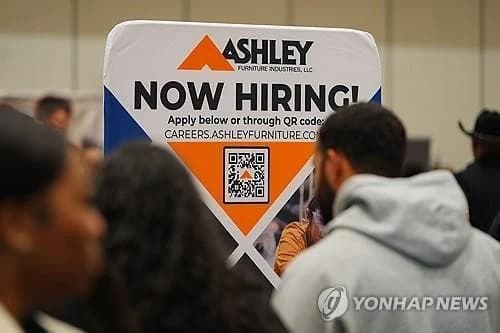
U.S. private sector employment in July saw its smallest increase of the year, adding just 44,000 jobs. This figure represents a more than 50% drop compared to June (95,000) and falls significantly short of the market expectation of 75,000 compiled by Dow Jones.
A detailed analysis of this report, jointly released by ADP Research and the Stanford Digital Economy Lab based on payroll data of over 26 million U.S. private sector workers, reveals a stark divergence in job growth across industries.
Service Sector Leads Employment Growth; Leisure, Hospitality, and Goods-Producing Sectors Decline The service sector added 47,000 jobs, driving the overall employment increase. Notably, the education and healthcare services sector created 36,000 jobs, followed by financial activities (10,000), professional and business services (9,000), and information services (5,000). Conversely, employment declined in the leisure and hospitality (-11,000), trade, transportation, and utilities (-8,000), and natural resources and mining (-6,000) sectors. While manufacturing (2,000) and construction (1,000) saw modest gains, the goods-producing sector as a whole lost 3,000 jobs.
By company size, small businesses with fewer than 50 employees added 23,000 jobs, while large and medium-sized establishments added 13,000 and 8,000 jobs, respectively. More than half of the total employment increase was attributed to small and medium-sized enterprises.
Job Switchers' Wages Surge 7%... Labor Market Supply Constraints Persist Regarding wage trends, the wages of job switchers rose 7% year-over-year, marking the fastest pace of increase since August of last year. The wage growth rate for job stayers remained at 4.4%, unchanged from the previous month, with relatively higher wage increases observed in the financial and manufacturing sectors.
Commenting on the rapid wage growth for job switchers, ADP Chief Economist Nela Richardson explained, "It suggests that supply constraints remain in certain parts of the labor market." She added, "Employers are adjusting their hiring patterns to adapt to the changing macroeconomic environment."
Stable Labor Market and the Fed's Policy Stance Bloomberg interpreted the latest employment data as an indication that the U.S. labor market remains stable, underpinned by solid corporate and consumer demand. Federal Reserve officials are also expressing confidence in the employment situation, placing the weight of their policy on inflation management. The Federal Reserve has kept its benchmark interest rate frozen for five consecutive meetings from January through July of this year.
Future Monetary Policy and Exchange Rate Implications Draw Attention This ADP report was released two days ahead of the official nonfarm payroll data from the U.S. Bureau of Labor Statistics (BLS). According to a Dow Jones survey, economists expect this official employment report to show an increase of 83,000 jobs and an unemployment rate holding steady at 4.2%. (The official job growth figure for June was 57,000).
U.S. employment and inflation indicators are drawing close attention, as they could directly impact not only the Federal Reserve's interest rate policy direction but also the Bank of Korea's monetary policy and the volatility of the won-dollar exchange rate.
CBC Globe publishes verified stories with editorial review, source checks, and tenant-specific publication standards.
Related Articles

600 Billion Won Invested as Pohang AI Data Center Kicks Off in Earnest... 'Operations to Begin in First Half of 2028'

Lee Kang-in Set for First Match in Atletico Jersey... Named to 27-Man Squad for Coupang Play Series

13th Jeju Samdasoo Masters Opens... KLPGA Goes All Out on Safety Amid Heatwave Concerns