
Won-Dollar Rate Falls to 1,420 Won Level on U.S.-Japan Joint FX Intervention... Bessent: "Witnessed Won Volatility"
With the confirmation of joint foreign exchange market intervention by U.S. and Japanese authorities, the won-dollar exchange rate fell to the 1,420-won range o
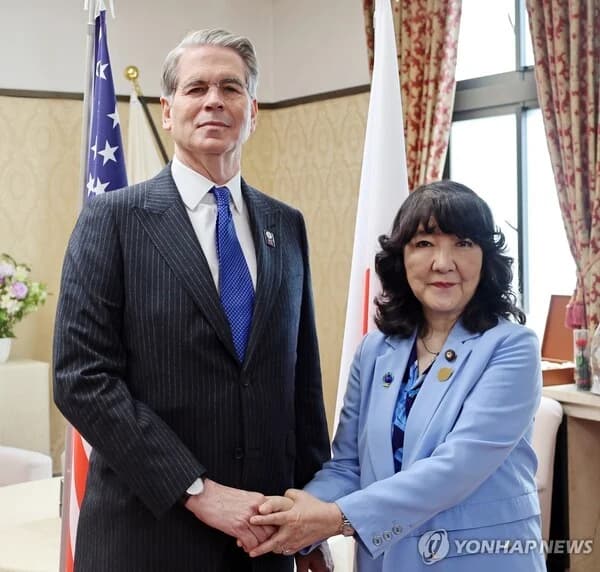
With the confirmation of joint foreign exchange market intervention by U.S. and Japanese authorities, the won-dollar exchange rate fell to the 1,420-won range on the 5th as U.S. Treasury Secretary Scott Bessent directly addressed volatility in the Korean won.
Secretary Bessent: "Witnessed Excessive Volatility in Korean Won" U.S. and Japanese authorities officially confirmed on the 31st of last month that they conducted a joint intervention in the foreign exchange market to defend the weak yen. Subsequently, U.S. Treasury Secretary Scott Bessent stated in an interview with CNBC on the 4th (local time), "We will do whatever is necessary to support Japan for the sake of the U.S. economy, taxpayers, and the stability of the global economy."
In particular, Secretary Bessent heightened market vigilance by stating, "When the yen shows significant weakness, other currencies may follow that trend," and "We have also witnessed excessive volatility in the Korean won." As interpretations emerged that the United States may not tolerate a situation where yen weakness spreads to the Korean won and other Asian currencies overall, market interest in the possibility of additional policy responses is growing.
Won-Dollar Rate Closes in 1,420-Won Range as Foreigners Net Buy 1.4 Trillion Won Against this backdrop, the won-dollar exchange rate closed at 1,424.5 won in the Seoul foreign exchange market on the 5th, down 8.0 won from the previous trading day.
The exchange rate opened at 1,430.5 won early in the session and rose to 1,431.7 won around 9:00 a.m., but then reversed to a downward trend, falling below 1,430 won around 10:00 a.m. By 12:10 p.m., it had dropped to 1,420.8 won, widening its losses. This is interpreted as a signal that the United States may support Japan's defense of the weak yen having a direct impact on the won exchange rate.
Strong buying by foreign investors in the domestic stock market also supported the strength of the won. Influenced by a surge in U.S. semiconductor stocks, foreigners net purchased 1.4436 trillion won worth of shares, shifting to net buying for the first time in two trading days. However, once the exchange rate entered the mid-1,420-won range, the downward trend somewhat slowed. Each time the 1,430-won level was breached, settlement demand from importers and bargain-hunting buy orders flowed in, limiting further declines.
Yen Weakness Pressure Persists Due to Structural Interest Rate Differentials The Bank of Korea's Beijing office reported that Chinese state media and local experts evaluated the joint intervention by U.S. and Japanese authorities not as U.S. support for Japan, but rather as a "decision prioritizing U.S. national interests."
Experts analyzed that yen weakness pressure is persisting due to structural factors such as the interest rate differential between the U.S. and Japan and Japan's expansionary fiscal policy. In fact, while the U.S. policy interest rate stands at 3.5–3.75%, Japan's remains at just 1%. As of the 31st of last month, the 10-year government bond yields also showed a significant difference, with the U.S. at 4.75% and Japan at 2.8%.
Accordingly, opinions have been raised that yen selling pressure may continue, and that while this joint intervention may temporarily reduce speculative yen short positions, it would be difficult to fundamentally change the direction of the weak yen phenomenon. On the other hand, some assessments suggest that since the United States is wary of the yen's weakness spilling over into Asian currencies, this could serve as a policy safety net to prevent further weakening of the won, which would be favorable for the Korean currency for a certain period.
CBC Globe publishes verified stories with editorial review, source checks, and tenant-specific publication standards.
Related Articles

600 Billion Won Invested as Pohang AI Data Center Kicks Off in Earnest... 'Operations to Begin in First Half of 2028'

Lee Kang-in Set for First Match in Atletico Jersey... Named to 27-Man Squad for Coupang Play Series
13th Jeju Samdasoo Masters Opens... KLPGA Goes All Out on Safety Amid Heatwave Concerns