
Police to Ban Officers From Directly Investigating Cases Involving Family Members... Discussion on Introducing 'Conflict-of-Interest Avoidance System'
A comprehensive survey conducted by the Korean National Police Agency across police stations nationwide has identified a total of 117 cases involving family mem
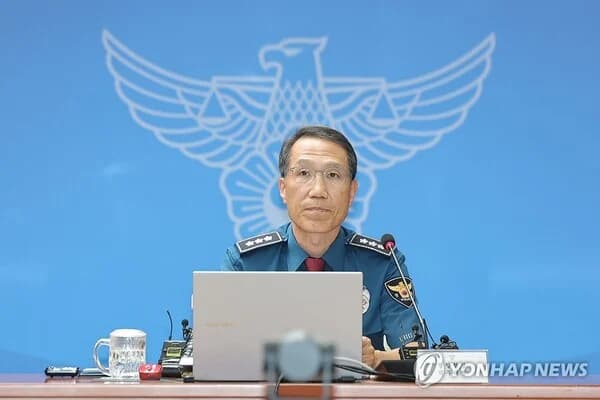
A comprehensive survey conducted by the Korean National Police Agency across police stations nationwide has identified a total of 117 cases involving family members of police officers. The survey was launched to assess the reality of police-related family incidents following the 'Jang Yoon-gi case.'
A 'police family incident' refers to cases where a person involved in an incident is the spouse or direct lineal ascendant/descendant of a police officer who works, or has worked within the past three years, at the police station handling the case.
In response to such family-related incidents, the police plan to introduce a 'conflict-of-interest avoidance system' (Sangpije) starting early next month. This measure bars the relevant officer from directly participating in the investigation and transfers the case to a different police station.
Meanwhile, at a task force (TF) meeting held on the 7th regarding follow-up measures to the revised Criminal Procedure Act, ways to secure personnel were also discussed. Reflecting a downward trend in illegal and violent protests, the police decided to reduce riot police forces and secure an additional 881 investigators through redeployment. For additional personnel needs, the police plan to review various measures, including consultations with relevant ministries and internal staff reallocations.
To enhance investigative fairness and strengthen internal controls, the police are also pursuing improvements to several systems. During the second half's regular personnel reshuffle, the investigative inspection function previously handled by the National Investigation Headquarters will be transferred to and reorganized under the Human Rights Audit Office. Additionally, a dedicated 'Internal Corruption Investigation Unit' will be newly established to directly investigate corruption leads from police organizations nationwide.
Other measures include strengthening the management and oversight of cases requested by prosecutors and creating detailed plans to establish a 'Subcommittee for Socially Vulnerable Groups' within the Police Investigation Review Committee. A 'reporting-by-proxy through a legal representative' system is also being pursued to protect whistleblowers' identities.
To make the National Police Committee more effective, plans are in place to improve the efficacy of the Police Investigation Review Committee, establish human rights and inspection bodies within the police, and revise the Police Act, all within this year. The police intend to initially implement these measures as internal guidelines and later establish formal legal grounds, such as official directives.
The Korean National Police Agency will continue discussions on revising subordinate legislation and improving investigative procedures following the amended Criminal Procedure Act, centered on the National Investigation Headquarters and the Investigation Planning and Coordination Officer, and plans to share progress at task force meetings.
CBC Globe publishes verified stories with editorial review, source checks, and tenant-specific publication standards.
Related Articles

Cashwalk Money-Earning Quiz August 8 Answers Summary — FIX Big Fan·CJ The Cepé Edition

'You Quiz on the Block' Features Lee Eun-gyeol and Lee Seung-cheol... Takes No. 1 Ratings, Christopher Nolan and Matt Damon Set to Appear Next Week

LE SSERAFIM's Huh Yunjin, CORTIS, and KATSEYE Named in U.S. Variety's '2026 Young Hollywood Impact'