
Highway Tolls Free for Four Days Over Chuseok... Fuel Prices Cut by 100 Won Per Liter
With homebound and return travel demand expected to surge during the short Chuseok holiday, the government will launch a special traffic countermeasures plan including highway toll exemptions, lower fuel prices at rest stop gas stations, and expanded public transportation supply. Since this year's h
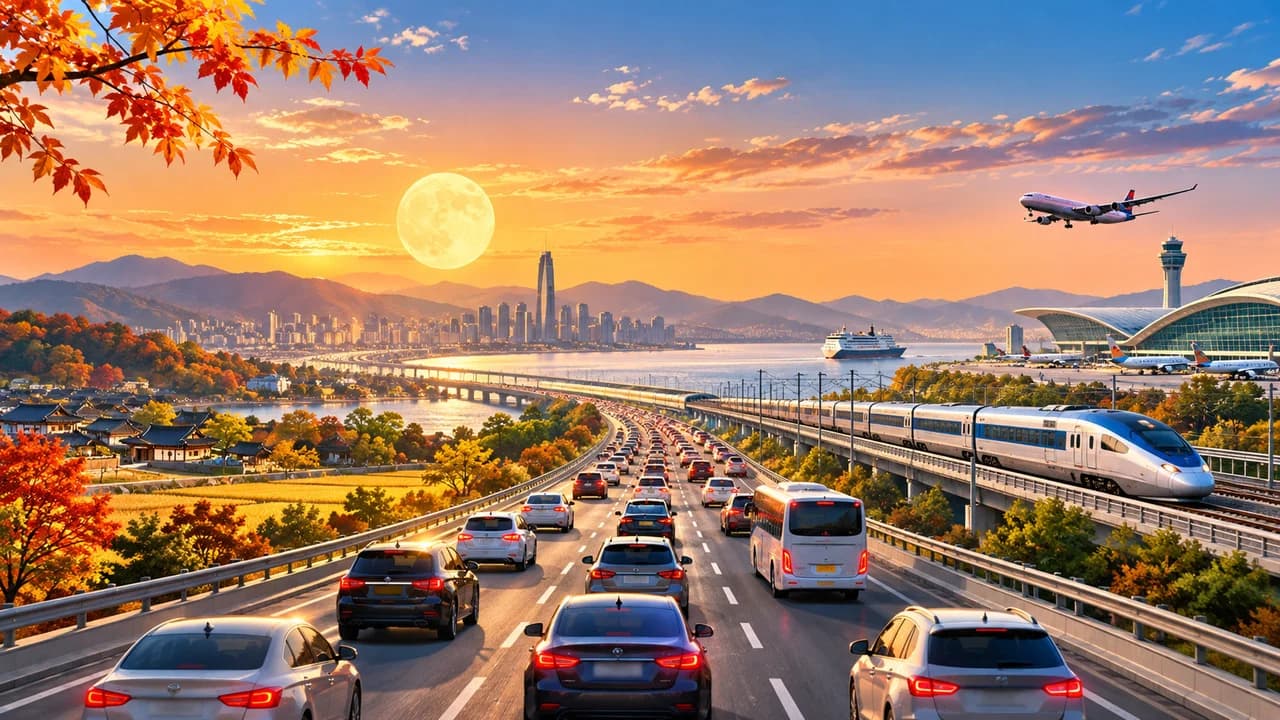
With homebound and return travel demand expected to surge during the short Chuseok holiday, the government will launch a special traffic countermeasures plan including highway toll exemptions, lower fuel prices at rest stop gas stations, and expanded public transportation supply. Since this year's holiday is shorter than last year's, daily traveler numbers are expected to rise sharply, so travelers should also pay attention to their departure times.
The government, in a joint effort with related ministries, will operate a special traffic countermeasures headquarters for five days from September 23 to 27. The key goals are to lower travel costs during the holiday while easing the concentration of vehicles at particular times and on particular roads.
■ Highway Tolls Free for Four Days... KTX Fares Also Reduced First, highway tolls nationwide will be waived for four days from September 24 to 27. Private-investment highways are also included in the exemption. At 226 highway gas stations, fuel prices will be cut by 100 won per liter.
Benefits have also been prepared for rail passengers. For this Chuseok, the first since the integration of Korail and SR, KTX fares have been reduced by an average of 10%, and travelers going against the peak direction (yeokgwiseong) will receive discounts of up to 50%.
■ Average Daily Travelers Up 56%... Peak Congestion Expected on the Morning of the 24th for Homebound Trips The biggest variable this holiday is the volume of travel compressed into a short period. Based on a travel survey of 10,004 people, the Korea Transport Institute estimated the total number of travelers during the special traffic countermeasure period at 30.93 million, 3.5% less than last year's 32.04 million.
However, the picture changes on a daily basis. The average daily number of travelers is projected at 11.82 million, up 56.0% from last year's 7.57 million. While total traveler numbers are down, the shorter travel period means daily traffic volumes will swell significantly.
By date, Chuseok day itself, the 25th, is expected to see the most travelers at 12.99 million, followed by the 24th with 11.96 million, the 23rd with 11.82 million, the 26th with 11.44 million, and the 27th with 10.86 million.
Homebound traffic will be most concentrated on the morning of the 24th. According to government forecasts, the trip from Seoul to Busan could take up to 10 hours and 30 minutes, and from Seoul to Mokpo up to 10 hours and 45 minutes. Conversely, return traffic toward Seoul is expected to be most congested on the afternoon of Chuseok day, the 25th. Busan to Seoul could take up to 9 hours, and Mokpo to Seoul up to 7 hours and 40 minutes.
■ Road Measures Including Extended Shoulder Lanes and Bus-Only Lanes Road capacity expansion and detour guidance will also be implemented. A total of 71 kilometers across 11 sections of national roads will newly open, and 299 sections of highways and national roads designated as expected congestion zones will be placed under intensive management. Shoulder lanes will operate on 64 highway sections.
Operating hours for the bus-only lane on the Yangjae—Sintanjin section of the Gyeongbu Expressway will also be extended. From the 23rd to the 27th, it will operate until 1 a.m. the following day, four hours longer than usual.
Rest stop congestion management will also be strengthened. At 14 major highway rest stops, parking conditions will be displayed as 'available,' 'congested,' or 'full' before vehicles enter, to reduce unnecessary entry and waiting times.
■ 853,000 Additional Public Transportation Seats Public transportation supply will also increase. The government will expand service by a total of 11,567 trips compared to normal periods and supply an additional 853,000 seats. In particular, bus trips will increase by 9,880 over normal periods, with supplied seats expanding from 2.56 million to 2.958 million. Of the additional 398,000 seats, express buses account for 145,000 and intercity buses for 253,000.
For rail, 11 passenger train sets and 15 electric train sets will be on standby for emergencies, and maintenance teams and track inspection personnel will be deployed at major stations. On the 26th and 27th, when return travel demand is expected to peak, late-night electric train service will be extended by a total of 24 runs on five lines including Seoul Metro Line 1.
crackdowns on illegal ticket reselling for the holiday will also be strengthened. When suspected ticket scalping is found on online secondhand trading platforms, Korail staff will pose as buyers to identify sellers in a 'mystery shopper' operation. Suspected cases can also be reported through Korail's website and mobile app.
■ Airport and Coastal Ferry Measures, and AI-Based Safety Management At airports, security screening will operate flexibly during peak passenger hours and additional staff will be deployed. Congestion conditions at Incheon, Gimpo, Gimhae, and Jeju airports will be provided in real time through major portals. Incheon International Airport will expand the number of airlines supporting self-check-in from 20 to 24, and self-bag drop from 10 to 13 airlines. Temporary parking lots will also be secured to meet holiday parking demand.
Measures for holiday travelers using coastal ferries will also be implemented. Sailing information will be linked to Naver and Kakao route-finding services, and a 'tomorrow's sailing forecast' will allow users to check sailing availability one to three days in advance. Five state-managed coastal passenger terminals will waive parking fees from the 23rd to the 27th.
AI technology will also be used in safety measures. Traffic accident caution zones selected through AI analysis will be expanded from 40 to 50, and a system will operate to check seatbelt use on highways. In preparation for severe weather, vulnerable facilities such as slopes will be monitored in real time and recovery equipment and materials secured in advance. If a risk of secondary accidents from breakdowns or accidents on roads is confirmed, an emergency evacuation call system using phone numbers registered in Hi-pass terminals will also operate.
Maintenance of 498 fire and doctor helicopter landing sites has also been completed. The Korea Expressway Corporation plans to analyze footage obtained during patrols with AI to file public interest reports on vehicles violating traffic laws. Police and related agencies will also intensively crack down on violations that raise accident risks, such as speeding, reckless driving, overloading, and illegal modifications.
This year's Chuseok traffic flow is expected to be shaped less by the total number of travelers than by the compression of homebound and return trips into a short holiday. With vehicles expected to concentrate on the morning of the 24th for outbound trips and the afternoon of the 25th for return trips, travelers should check real-time traffic information and detour road conditions before departing.
[This article was restructured based on public materials from the Republic of Korea's Policy Briefing. Traffic volumes, expected travel times, and operation plans may vary depending on actual traffic and weather conditions, so travelers should check the latest guidance from relevant authorities before departure. AI was used for some sentence drafting and data organization.]
CBC Globe publishes verified stories with editorial review, source checks, and tenant-specific publication standards.
Related Articles

Ministry of Health and Welfare Selects 8 New Senior Job Categories... Leveraging New Senior Generation Expertise in Finance, Law, and Tourism

Second Application Round for Youth Future Savings Begins October 7... Up to 500,000 Won Monthly, Government Contributions, and Conversion from Youth Leap Accounts Possible

Group Injury Insurance for Soldiers During Military Service, Indemnity Health Insurance After Discharge... Youth Medical Cost Support Measures Included in 2027 Budget Proposal