Two Critical PHP Vulnerabilities Discovered by AI... OpenAI, Wiz, and Cloudflare Coordinate Global Patches Before Public Disclosure
Two critical security vulnerabilities in PHP, a programming language widely used by websites around the world, were discovered during AI security research. OpenAI and security firm Wiz each identified the vulnerabilities, and PHP developers and global technology companies spent about two months prep
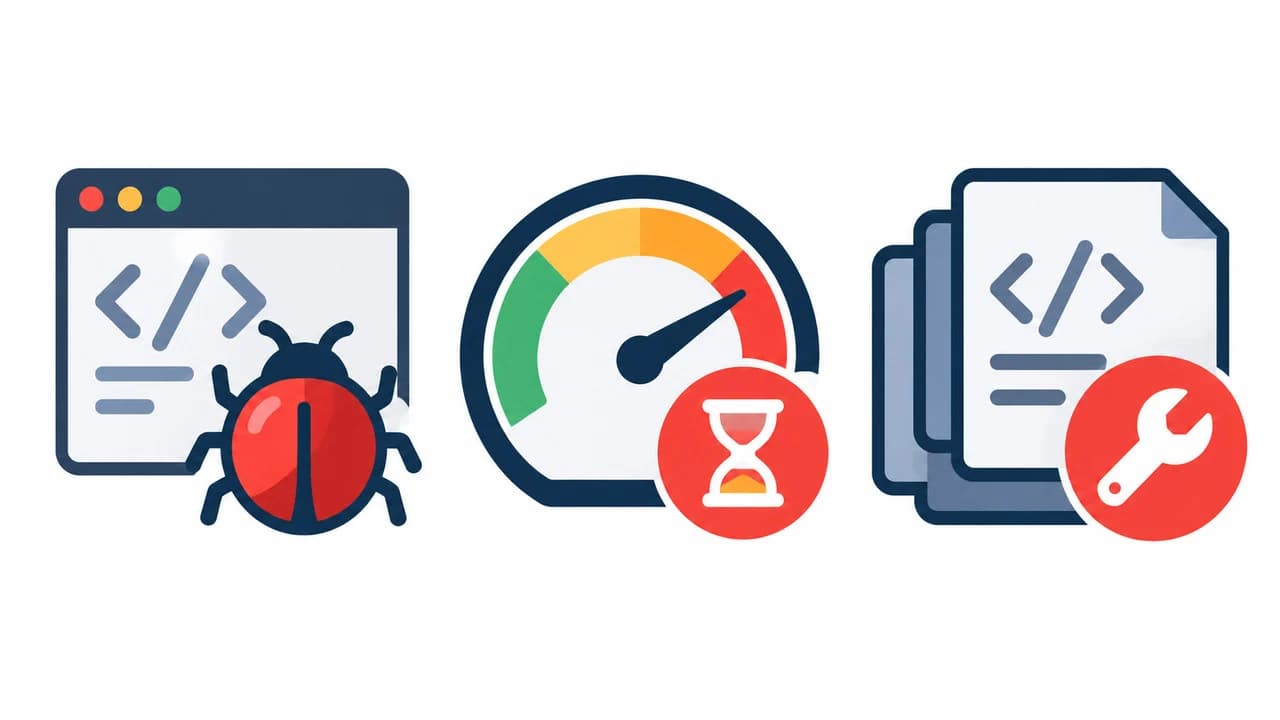
Two critical security vulnerabilities in PHP, a programming language widely used by websites around the world, were discovered during AI security research. OpenAI and security firm Wiz each identified the vulnerabilities, and PHP developers and global technology companies spent about two months preparing security patches and protective measures in advance.
On the 21st (local time), OpenAI published the details of the PHP vulnerability discovery and the coordinated international response in a release titled 'Patch the Planet: Coordinating a Global Response to Agent-Discovered Critical Vulnerabilities.'
Flaw Found by GPT-5.6 Sol... CVSS Score of 9.2
According to OpenAI, security researcher Calif discovered a critical flaw in PHP using GPT-5.6 Sol as part of the 'Patch the Planet' initiative. Cloud security firm Wiz also independently discovered and reported both vulnerabilities.
The vulnerabilities in question are CVE-2026-109618 and CVE-2026-109619. Both are related to the ability to execute code remotely without going through normal authentication procedures, and the PHP security team rated the severity of both vulnerabilities at 9.2 each under CVSS 4.0.
Fixing the vulnerabilities and releasing new versions were led by PHP maintainers, while OpenAI, Wiz, Cloudflare, and others supported technical research, security response, and cooperation among relevant organizations. On the 21st, the PHP development team released PHP versions 8.5.12, 8.4.27, 8.3.36, and 8.2.35 and recommended immediate updates.
Various Execution Environments Affected, Including mod_php
The security issue is related to a variety of PHP execution environments, including PHP-FPM, Apache's mod_php, php-cgi, FrankenPHP, and LiteSpeed. In particular, it was confirmed that in mod_php environments, the vulnerability could be exploited with unauthenticated requests alone before application code is executed.
OpenAI assessed this case as one of the most impactful among recent security issues. Since PHP is widely used to operate websites and web applications, the judgment is that the security flaws could affect many systems. However, the discovery of the vulnerabilities does not mean that every PHP-based website has been compromised. Actual risk varies depending on the version in use, server configuration, and whether security patches have been applied.
White House and CISA Cooperated 'Before' Disclosure
A notable aspect of this response is that multiple organizations prepared protective measures before the vulnerabilities were disclosed. OpenAI explained that PHP maintainers, security firms, and infrastructure providers participated in fixing the vulnerabilities, verifying them, and developing security guidance. Response plans were also discussed with government bodies and international cooperation organizations, including the White House's superintelligence task force, the Office of the National Cyber Director (ONCD), and the Cybersecurity and Infrastructure Security Agency (CISA). This represented a departure from the conventional approach of responding only after security flaws are made public, focusing instead on cooperation to prepare fixes and protections before disclosure.
Based on this experience, OpenAI proposed a five-step cooperation framework for responding to critical software vulnerabilities: ▲vulnerability verification and fix development by software maintainers and security researchers ▲giving affected organizations time to respond ▲protecting critical infrastructure through cooperation with government agencies ▲preparing updates for related products and services ▲and publishing security guidance and supporting actual patch deployment. Notably, the authority to decide when to disclose a vulnerability rests with the maintainers of the software in question. The intent is to balance the risk of leaks that may arise when sharing security information in advance with the preparation time needed to protect systems.
'Found Before Attackers'... But Only Per OpenAI's Account
OpenAI acknowledged that while AI technology can contribute to finding security vulnerabilities, the same technology can also be used by attackers to develop malicious code or exploit vulnerabilities. According to OpenAI's understanding, these PHP vulnerabilities were discovered by frontier AI before attackers found them, which allowed developers and security firms time to respond prior to disclosure. However, this is OpenAI's account, and it does not mean the possibility that attackers were aware of or exploited the vulnerabilities beforehand has been entirely ruled out.
$1 Billion 'Daybreak' Program
OpenAI is also investing in the 'Daybreak' program to expand AI-based security response capabilities. It has pledged $1 billion in grants to help organizations protecting essential services with limited security resources leverage AI security technology. Support for open-source software maintainers is also being pursued. The plan is to provide access to high-performance models needed for vulnerability analysis, engineering support, and funding to reduce the response burden on small development teams.
In the long term, OpenAI plans to pursue secure coding using AI, transitions to memory-safe programming languages, mathematical verification, and strengthened isolation of software execution environments. OpenAI expects that similar vulnerability discoveries through AI-driven security research will increase over the coming months, and believes that not only the speed of discovering vulnerabilities but also the importance of systems for fixing them and applying those fixes to real systems will grow.
Temporary Configurations When Updates Are Difficult...'Not Complete Security'
The PHP development team emphasized that when immediate updates are difficult, some server settings can limit attack paths, but such interim measures alone cannot ensure complete security. This case shows that AI can find flaws in widely used software while also bringing changes to how developers, security firms, and government agencies cooperate. However, actual security is achieved only when the discovery of vulnerabilities is followed through to the process of applying patched software to each server.
[This article was written based on public security disclosures and technical materials. The announcement of vulnerability discoveries and security patches does not imply that actual hacking or data breaches occurred. AI provided some assistance.]
CBC Globe publishes verified stories with editorial review, source checks, and tenant-specific publication standards.
Related Articles

[HBM-Related Stocks] Samsung Electronics and SK Hynix Fall Over 4%... Hanmi Semiconductor and Others Also Weak, KOSPI Down 2.87%

Two Critical PHP Vulnerabilities (CVE-2026-109618, 109619) Discovered... CVSS 9.2, Emergency Security Update Released

[Breaking] Critical PHP Security Vulnerability Discovered... MSIT and KISA Urge Domestic Companies to Take Urgent Security Measures