
Why Is Lim Young-woong's Voice Trusted? Reading the Health of the Popular Music Ecosystem Through Narrative and Authenticity
What makes a good voice in popular music? Is it the ability to move freely across a high vocal range, precise vocalization and unwavering pitch? Or is it a distinctive timbre that lets listeners recognize the singer the moment they hear it? These elements are important criteria for explaining vocal
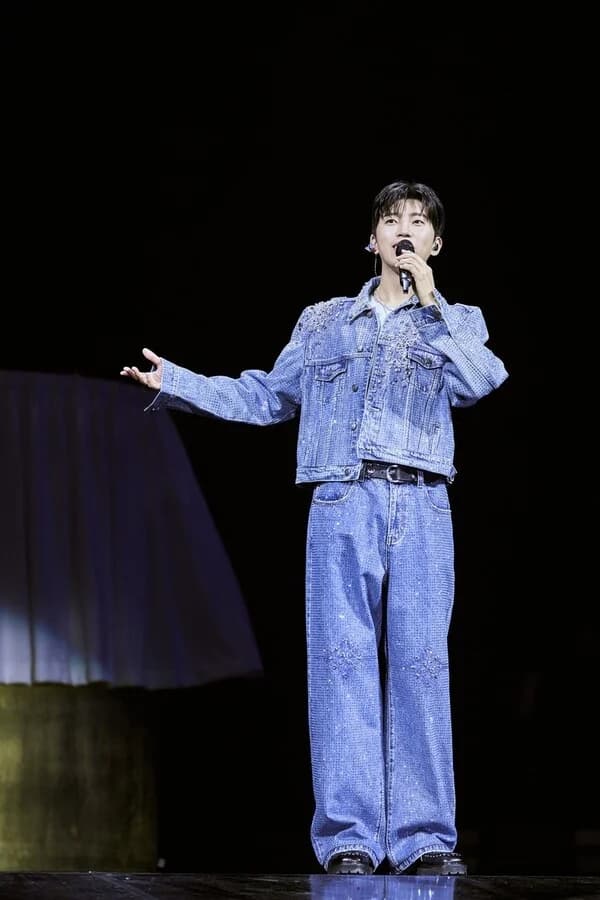
What makes a good voice in popular music? Is it the ability to move freely across a high vocal range, precise vocalization and unwavering pitch? Or is it a distinctive timbre that lets listeners recognize the singer the moment they hear it? These elements are important criteria for explaining vocal ability. However, they are not sufficient to explain why a certain voice stays in people's hearts for a long time. A song begins as sound, but only when that sound meets a person's life does it become a memory.
This is the point to focus on when looking at Lim Young-woong's music. His voice goes beyond the ability of a singer who simply sings well; it forms a space into which listeners can project their own experiences and emotions. For some, it is a voice that makes them look back on the years they have lived; for others, it is a consolation that helps them endure the hardships of the present; and for still others, it is a sound that reminds them of life's possibilities that have not yet ended.
The fact that a single voice can connect different lives in this way makes us rethink the essence of popular music. The value of music does not lie solely in how many people consume it simultaneously. It also lies in how deeply it enters an individual's life and how long it continues to create meaning within it.
The phenomenon surrounding the singer Lim Young-woong also needs to be read from this perspective. If his musical influence is explained only by popularity, fandom, and concert and streaming performance, an important part may be missed. There is a more fundamental question: Why do people listen to his voice repeatedly? And how does that repetition become trust?
The Meaning of Long-Lasting Music in an Age Overflowing with Novelty
Popular music is an industry that constantly demands the new. New faces and trends, technologies and formats emerge. The speed at which a song reaches the public has accelerated, but so has the speed at which it is forgotten. Short videos and recommendation algorithms have broadened the discoverability of music, but sometimes they also reduce the time available to fully listen to and understand a song.
In this environment, music that is loved for a long time carries meaning beyond mere commercial success. It means becoming not content that is repeatedly consumed, but an emotional place people want to return to again and again.
Lim Young-woong's music raises an interesting question at this point. Rather than always foregrounding new stimuli, his songs approach listeners by leading them to rediscover familiar emotions. Emotions that popular music has long dealt with—love and parting, waiting and longing, gratitude and regret—come back to life as present-day experiences as they pass through his voice.
What matters here is not exaggeration of emotion but the persuasiveness of delivery. Singing about sadness does not necessarily sound sad. Speaking of consolation does not mean everyone is consoled. A certain channel of empathy must be formed between the emotion the singer expresses and the emotion the listener has experienced.
Vocals That Leave Space, a Voice with Narrative
One of the strengths of Lim Young-woong's songs is that they do not unilaterally impose emotion. In his singing, moments that call for strong expression and moments that require restraint are distinguished. Rather than the voice trying to explain every meaning, it leaves space for listeners to fill in with their own memories.
That space frees the act of listening from passivity. While listening to a song, the listener recalls their own story. It is the experience of a singer's song becoming, at some moment, the listener's own song. This is the power of a voice with narrative.
Narratives are not necessarily created only from dramatic events or extraordinary life experiences. A narrative is formed depending on what a person says, with what attitude they deliver it, and whether the meaning of those words endures over time. The same is true of a singer's voice. Giving a powerful impression in a single stage performance and earning listeners' trust over many years are different matters. If the former is close to momentary expressiveness, the latter is the result of accumulation.
Beyond Trot: The Boundaries of Genre and Generation
Lim Young-woong's musical identity can be examined from this perspective of accumulation. His music has the emotional foundation of trot, but that alone cannot explain his entire musical world. His path, which encompasses the expressive methods of ballads and pop as well, makes us value the character of the emotion a song conveys more than the boundaries of any particular genre.
This does not mean rejecting genre. Rather, it is an approach that respects the unique expressive methods of a genre while not confining listeners within it. Looking back at the history of popular music, genres have been a useful language for understanding music, but at times also a classification system that limited music's possibilities. Yet musical emotion is not divided so neatly. A young person can find their own struggles in an old song, and someone who has lived through many years can feel an unfamiliar thrill in new music.
Lim Young-woong's musical presence makes us rethink these boundaries of genre and generation. What draws attention through him is not just the taste of a particular generation, but the possibility that different generations can understand a single voice each in their own way.
What Is a Healthy Popular Music Ecosystem?
It is precisely this diversity that a popular music ecosystem needs in order to be healthy. A healthy music ecosystem is not a market where all music succeeds in the same way. It is an environment where musicians of diverse genres, generations, and sensibilities can each form relationships with listeners in their own way. The growth of younger generations' music and respect for the musical tastes of middle-aged and older audiences are not conflicting goals. The emergence of new music and the renewed love of old songs need not be understood only as competition. Rather, the market becomes richer when different musical experiences coexist.
Lim Young-woong's activities provide one case for this discussion. The fact that a genre-based starting point in trot can expand into other musical forms, and that strong support from a particular generation can connect to broader public attention, is a point worth noting for the music industry.
However, one singer's success does not immediately prove the health of the entire music ecosystem. The concentration of attention and resources on a particular artist must be examined separately from other musicians' working conditions. What matters is not simplifying Lim Young-woong's individual achievements into the accomplishment of the entire industry, but asking what possibilities the music industry can discover through his case.
Trust and Authenticity: How Are They Formed?
At the center of that possibility lies trust. Trust is a value frequently used but hard to define in the popular music industry. Trust in a singer is not formed merely by a belief in pitch accuracy. A complex interplay of belief in the emotions a song conveys, belief in the attitude the musician shows, and the expectation that they will continue their musical identity all come into play.
Such trust is hard to create through advertising or promotion alone. A striking image may draw public attention, but for that attention to develop into a lasting relationship, experiences that back up the image are needed. In music, those experiences accumulate through repeated listening and performances, stages and works. At first, one listens to the music because the melody of a song is good; at some point, one begins waiting for the singer's next song. At that point, an emotional continuity that goes beyond a simple consumer relationship is formed between singer and listener.
This is why Lim Young-woong's voice should be read from the perspective of trust. Rather than presenting a completely new world each time, the emotions his songs convey let listeners meet emotions they already know. When familiarity does not end in banality but works as a sense of stability, a voice becomes a trustworthy mode of expression.
That said, trust is not the same as an attitude that rejects change. It is closer to the expectation that even when trying new genres and expressions, one can still find the musician's unique sensibility and attitude within them. Therefore, authenticity, too, must be understood not as an unchanging image, but as a matter of consistency maintained amid change.
The word authenticity is sometimes used too romantically. Interpreting all of a singer's actions as evidence of authenticity merely because they sing moving songs, or directly connecting strong public response to personal moral completeness, should be approached with caution. Authenticity that can be verified in music is, first of all, a matter of works and expression. It can be discussed through how persuasively a song's meaning is conveyed, how consistent the manner of expressing emotion is, and what kind of experience the musical choices provide the listener. Beyond that, a person's inner self cannot easily be determined from the outside.
This distinction actually makes evaluations of musicians more solid. The discourse on authenticity surrounding Lim Young-woong's music also needs to develop in this direction. Rather than asserting what kind of person he is, we should examine how his voice conveys emotion and why that emotion gains persuasiveness with listeners.
The Balance of Technique and Sensibility
In particular, the texture and breath of his voice and the way lyrics are delivered play important roles in his songs. The technical perfection of his singing does not overwhelm the delivery of emotion; rather, it forms a structure that supports it. Listeners can admire excellent vocal technique while at the same time focusing on the scenes of life the song speaks of.
This shows that technique and sensibility in popular music are not necessarily opposed. Technique cannot replace emotion, but refined technique can be a means of conveying emotion more vividly. A good song gains persuasiveness when technique and sensibility combine into a single expression without encroaching on each other's roles. Lim Young-woong's singing is an apt case for discussing this balance.
The Two Sides of Fandom Culture
Another notable aspect of his music is the way listeners connect songs to their own lives. Popular music is inherently an art where personal and collective experiences meet. A song listened to alone through earphones creates a deeply private world of emotion, but the moment countless people sing the same song together, a collective memory is formed. A song that reminds one person of family can become, for another, a memory of a past love.
The meaning Lim Young-woong's songs hold for fans is likewise hard to define in a single way. The experiences and emotions of those who support him are all different. Therefore, interpreting fandom merely as the enthusiasm of a particular age group or one-directional affection toward a celebrity cannot fully explain the complex cultural experiences within it. Fandom can be a way of listening to music and a way of forming relationships with others. People who like the same music talk through songs, create shared experiences through concerts, and share the emotions they have felt with others.
Of course, the cohesion of fandom does not always produce only positive results. Excessive competition, exclusionary attitudes, and excessive obsession with rankings and records can rather narrow the experience of enjoying music. A healthy fandom must be able to support its favorite musician while also respecting other musicians and listeners' tastes. Fandom culture surrounding Lim Young-woong, too, needs to be viewed against the standard of a mature popular music ecosystem. Fans' strong support can provide a musician with a stable foundation for activity, but for that support to carry greater cultural meaning, it must lead to attention to the music itself and an open attitude.
Beyond Numbers: The Media's Perspective
Today, music-related reporting is often built around streaming rankings, view counts, sales figures, and concert scale. These numbers are useful for grasping market movements. But numbers do not explain all of music's value. Why a song is loved for a long time, the process by which a particular voice earns fans' trust, and the questions a musician's activities raise about the relationship between generations and genres are hard to verify through charts alone.
If the media covering popular music repeatedly emphasizes only box-office records, music risks being consumed gradually as merely the outcome of competition. The question of who sold more is necessary, but alongside it, we must ask what music has remained in people's lives and what voice has connected the emotions of a generation. The media's gaze in evaluating Lim Young-woong also needs to expand to these questions. Explaining him only as a popularity phenomenon, or glorifying all his achievements as the result of special inspiration, is insufficient. A balanced approach is needed. When that happens, the name Lim Young-woong can become not just one singer's success story but a window for reading the changes and possibilities of Korean popular music.
Music's Time, Industry's Time
A deeper issue to consider is the relationship between music and time. The popular music industry constantly emphasizes the present. But the lives of those who listen to music do not move that quickly. People sometimes listen to a single song repeatedly for years. Lyrics not understood in youth sometimes finally reach the heart after life experience has accumulated.
Music's time and the industry's time are different. The industry demands new consumption, but humans also confirm their own lives through familiar songs. A healthy popular music ecosystem must be able to respect both of these times. While broadening opportunities for new musicians to emerge, it must create an environment where musicians who have been active for a long time can sustain their music.
Part of the reason Lim Young-woong's voice holds meaning for listeners lies not only in the impression of a particular moment but in the expectation of experiencing that impression again. Each time a song is replayed, past memories and present emotions overlap, and in that process, the music gains new meaning. Ultimately, trust in a voice is formed over time. At first, one listens because the song is good; later, one listens again because the voice has become familiar; and as more time passes, one comes to recall one's own life that accompanied that voice. At that point, music becomes part of the fabric of personal memory. A voice with narrative is precisely a voice that can withstand this accumulation of time.
Conclusion: Value Created by the Continuity of Relationships
So what is the most important question Lim Young-woong's music poses to the popular music ecosystem? It is not how quickly music can succeed, but how long it can sustain relationships with people.
The core value in such relationships is trust. Trust is not a license guaranteeing unconditional support for a musician, nor a demand that listeners give up criticism. Rather, trust is the foundation that allows musicians to be judged by their works, listeners to freely accept those works, and both sides to sustain their relationship over time.
Lim Young-woong's voice will not give everyone the same impression. Musical tastes are inherently diverse. But precisely within that diversity, the phenomenon of a particular voice gaining meaning over a long period is worth exploring. The maturity of popular music comes not from everyone liking the same music, but from recognizing different tastes and respecting each person's musical experience.
Both those who like Lim Young-woong's music and those who do not can think together about the cultural questions his activities raise: how one musician's voice crosses generational boundaries, forms the relationships of fandom, and prompts discussion of the music industry's sustainability. That question ultimately connects to what direction Korean popular music should take.
Music is a commodity, but it does not exist only as a commodity. Concerts are an industry, but they are not completed by industrial results alone. Human life is always involved in music. The moment one person listens to a song and recalls their own past, music transcends market statistics. The moment different generations accept the same song in their own languages, music broadens the possibility of cultural communication.
Lim Young-woong's voice makes us reconsider this role of music. What can be found in his songs is not simple emotional expression but the process of emotion moving between people. A song that begins with the singer's voice meets the listener's memory, and as that memory is shared with others, new meaning is created. In that process, a song becomes a narrative, and when the narrative continues, trust is formed.
What we should pay attention to does not stop at the question of how special a singer Lim Young-woong is. More important is asking what values of popular music we can rediscover through his music. That value is not measured solely by the size of spectacular stages or the height of records. It exists in the emotion that remains in the heart after the song ends, in the voice one wants to hear again as time passes, and in the empathy experienced by people who have lived different lives through a single piece of music.
The power that makes the popular music ecosystem healthy ultimately comes from these relationships. When musicians take responsibility for their expression, listeners interpret music freely, and the industry respects diverse musical values, music can grow from an object of mere consumption into a cultural asset. The discourse on authenticity and trust surrounding Lim Young-woong's voice is one starting point toward that possibility.
Authenticity is not completed by declaring it oneself, and trust is not automatically given merely because one is popular. Both values are slowly formed through countless moments where music and listeners meet, and are continually reconfirmed through new works and experiences. Perhaps the ultimate power of a good voice lies not in the ability to astonish people but in the ability to stay by their side for a long time.
The world changes quickly and musical trends shift endlessly. But the emotions humans seek in songs do not easily disappear. Longing and love, loneliness and hope, loss and recovery remain important parts of life even as eras change. Lim Young-woong's music lets us meet these emotions again in today's language and voice.
The future of popular music does not depend only on faster consumption and bigger records. It also depends on how deeply human experience is understood through music and how long that understanding can be sustained. If one person's voice can be a consolation to someone, and that consolation leads to trust through repeated experience, and that trust can expand into a culture that respects other generations and tastes, that would indeed be a meaningful possibility toward a healthy popular music ecosystem. The question Lim Young-woong's voice poses ultimately points toward the essence of music.
[This article highlights stars nominated for the Netizens Awards. The Netizens Awards is an online fan voting platform that does not sell voting rights and provides equal voting opportunities to all users. Rankings are determined by fans' voluntary and continued participation rather than capital, and the cumulative 80 million votes are a record of pure fan devotion built from each individual fan's choices. This article was partially assisted by AI.]
CBC Globe publishes verified stories with editorial review, source checks, and tenant-specific publication standards.
Related Articles
Rowoon Leads Globe Netizen Awards Best Actor Voting with 62.7%... Attention on Um Tae-goo and Byeon Woo-seok's Chase
Sung Rhee's 'A Man Says' Surpasses 2 Million Views, Fans Flood Congratulations... "A Voice You Listen to Again and Again" Moves Fans

[C Photo] XLOV, Even Their Shadows Look Cool on the 'Hush' Stage
