
Rising Apartment Prices Continue in Nowon, Dobong, and Gangbuk... Transaction Volume Falls 15%, Share of Higher-Priced Deals Also Declines
In the Seoul apartment market spanning Nowon, Dobong, and Gangbuk districts — collectively known as 'Nodo-gang' — rising prices and slowing transactions are occurring simultaneously. Apartment sale prices in all three districts continued to climb, but transaction volume declined, and the share of co
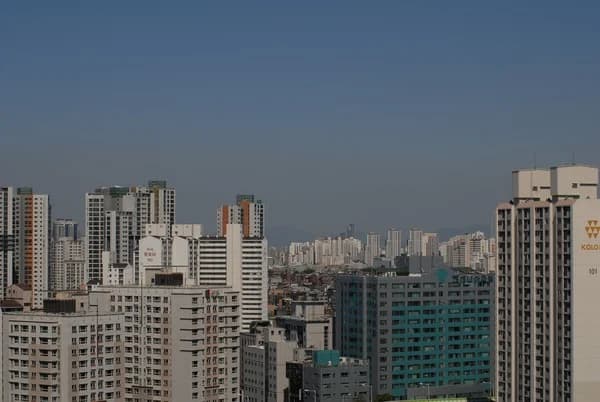
In the Seoul apartment market spanning Nowon, Dobong, and Gangbuk districts — collectively known as 'Nodo-gang' — rising prices and slowing transactions are occurring simultaneously. Apartment sale prices in all three districts continued to climb, but transaction volume declined, and the share of contracts signed at prices higher than previous deals also fell. Market changes that are difficult to capture through price indices alone are showing up in actual transaction statistics.
According to the weekly apartment price trends announced by the Korea Real Estate Board as of October 26, apartment sale prices in Nowon-gu rose 0.12% from the previous week, while Dobong-gu and Gangbuk-gu each rose 0.32%. During the same period, apartment sale prices across Seoul rose 0.09%, meaning all three Nodo-gang districts outpaced the Seoul average.
However, the change in the pace of increase varied by district. Nowon-gu's rise shrank from 0.26% the previous week to 0.12%, a reduction of 0.14 percentage points, and Dobong-gu also slipped slightly from 0.33% to 0.32%. In contrast, Gangbuk-gu's increase widened from 0.26% to 0.32%, an expansion of 0.06 percentage points. Seoul's overall growth rate also fell from 0.13% to 0.09%. It is worth noting both that Nodo-gang's price increases were stronger than the Seoul average and that the pace of increase diverged among the districts.
Price increases continued in the jeonse (long-term deposit lease) market as well. As of October 26, Nowon-gu apartment jeonse prices rose 0.29% from the previous week, and Dobong-gu rose 0.34%. Seoul's overall apartment jeonse price increase was 0.17%, up 0.01 percentage point from 0.16% the previous week. However, sale prices are influenced by financing costs, purchasing power, and transaction conditions, while jeonse prices can move differently depending on rental demand and contract terms, so the two markets do not necessarily move in the same direction and at the same speed.
In particular, the weekly price index is a statistic reflecting price changes across an entire area and should not be interpreted as identical to the actual contract price of individual apartments. Even when the price index rises, some complexes may trade at prices lower than before.
Actual transaction volume statistics confirmed movements distinct from the price uptrend. According to an analysis of Ministry of Land, Infrastructure and Transport actual transaction price data by the private real estate information site 'Singe-maeul,' reported by Chosun Biz on October 28, Nodo-gang apartment sale transactions fell from 826 in August to 701 in September, a drop of 125 deals (15.1%) in one month.
Not only transaction volume but also the share of contracts signed at prices higher than previous deals declined. The share of higher-priced transactions in Nodo-gang fell from 65.4% in August to 62.9% in September, and provisionally recorded 59.9% in October, a decrease of 5.5 percentage points over two months. Notably, higher-priced transactions, which numbered 509 in August, fell to 395 in September, a decline rate of 22.4% — higher than the overall transaction volume decline. This means that as trading slowed, the proportion of contracts sold at higher prices than before also declined.
However, the share of higher-priced transactions is calculated based on the median of the most recent transaction dates for the same complex and exclusive use area, and cases with no comparable prior transaction are excluded. October figures are provisional and may change as additional actual transaction reports are filed. Because regional price indices and actual transaction statistics are calculated in different ways, it is not appropriate to interpret the decline in the share of higher-priced transactions directly as a fall in apartment prices.
In fact, some complexes saw contracts signed at prices lower than earlier deals. According to the Chosun Biz report, a 12th-floor, 49.94 sqm (exclusive use area) unit at Sanggye Jugong Complex 7 in Nowon-gu traded for 710 million won on October 16 — 40 million won lower than the 750 million won recorded for the same size and floor this past July. Cases of contracts at lower prices than previous transactions also appeared at Changdong Jugong Complex 3 in Dobong-gu and Dream Forest Lotte Castle in Miadam-dong, Gangbuk-gu. However, apartment transaction prices can vary depending on floor, building, condition of the home, and timing of the contract, so it is difficult to determine the price trend of an entire complex based on a few cases alone.
The recent trend in the Nodo-gang apartment market can be explained by two indicators: rising prices and slowing transactions. While the weekly sale price index continues to rise, the number of transactions and the share of higher-priced deals have fallen. This shows that even amid continued price increases, changes are emerging in actual transaction patterns. To judge future market trends, it is necessary to examine not only price indices but also whether transaction volume recovers and how actual transaction prices for the same complex and unit size change. In particular, it is important to distinguish district-by-district price increases and individual complexes' transaction trends rather than treating Nowon, Dobong, and Gangbuk as a single market. The fact that prices are rising and the judgment that market heat is the same as before are two different issues.
[Price indices and actual transaction prices are calculated using different methods, and provisional transaction statistics may change with additional reports. This article was written with some AI assistance; responsibility for real estate transactions and investment decisions lies with the investor.]
CBC Globe publishes verified stories with editorial review, source checks, and tenant-specific publication standards.
Related Articles
Hanjin Kal's Largest Shareholder Changes to 'Hoban Construction and Three Others'... Secures 20.69% Stake
Korean Air to Acquire Maintenance Parts Worth 26.585 Billion Won from Air Busan... Material Transfer Following Assumption of Asiana Airlines Merger Contracts

[IPO] Nexteye Subscription Closes... Equal Allocation at 10.97 Shares, Proportional Competition Ratio at 25.52 to 1, Listing on the 12th
