U.S. Tightens AI Data Center Regulations vs. Korea's Promotion Policy... Outlook for Nuclear and Power Industries in Focus [Woori Technology 7,800 won]
With the possibility of strengthened regulations on AI (artificial intelligence) data center construction growing in the wake of the U.S. midterm elections, Korea is moving in the opposite direction, seeking to foster AI data centers as national growth infrastructure. Attention is focusing on how th
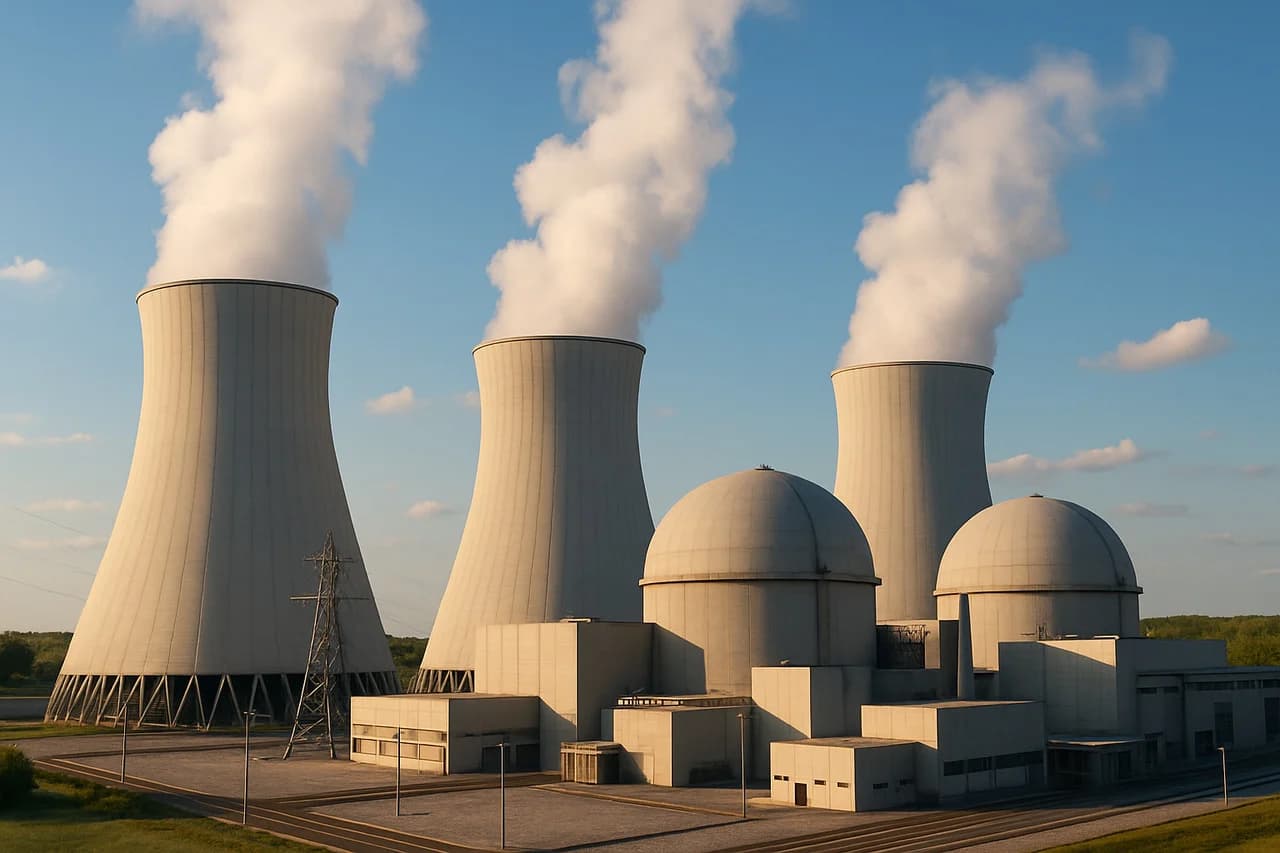
With the possibility of strengthened regulations on AI (artificial intelligence) data center construction growing in the wake of the U.S. midterm elections, Korea is moving in the opposite direction, seeking to foster AI data centers as national growth infrastructure. Attention is focusing on how the two countries' divergent policy directions will affect the business environment for domestic power and nuclear-related companies.
Woori Technology (032820) fell 310 won (3.82%) from the previous day to 7,800 won during the session, and closed the regular session at 7,730 won, down 380 won (4.69%). There was a 70-won gap between the regular session closing price and the subsequent price. Woori Technology's main business area is the control and instrumentation sector for nuclear power plants. However, it has not been confirmed whether the U.S. data center regulatory moves directly affected Woori Technology's stock price decline.
■ U.S. Regulatory Pressure on Data Centers Spreads
In the United States, political pressure on data center construction intensified following the midterm elections on the 3rd. Reuters reported on the 4th that as Democrats won gubernatorial elections in major states such as Texas and Georgia, uncertainty over large-scale data center development projects has expanded.
In particular, Gina Inohosa, the Democrat who won the Texas gubernatorial election, pledged to halt the approval process for new data centers until laws to protect local communities are enacted. Texas, with its abundant energy resources, cheap land, and business-friendly policies, has been a region where large-scale data center investments have concentrated, but the rapid growth of the AI industry has increased grid connection applications, adding strain to the power supply system.
According to Reuters, the scale of data center-related grid connection applications identified by ERCOT, the Texas grid operator, has exceeded 400 gigawatts. While this figure is distinct from actually confirmed construction capacity, it shows that AI infrastructure development plans could place a considerable burden on grid operations.
The regulatory issue is not a concern of Democrats alone. Texas Governor Greg Abbott, a Republican, also moved in August to restrict grid connections for new data centers and ordered a comprehensive review of related projects. Power consumption, environmental issues, and tax incentive controversies are expanding into local community concerns that transcend party lines.
Citing a Goldman Sachs analysis, Reuters reported that due to Democratic victories in state and local government elections, about 45% of planned data center capacity expansions in the U.S. could be affected by temporary project suspensions or regulatory tightening. However, this is merely an analysis of the potential scope of regulatory impact, not a sign that actual construction has been halted.
It is also still difficult to conclude that this will lead to shrinking investment. While some projects may be delayed, companies can respond by changing development locations or adjusting power supply methods. Indeed, according to Bloomberg, Google announced on the 5th a plan to invest 17 billion dollars to build data centers in the U.S. state of Wyoming. Ultimately, the changes in the U.S. focus not on opposing the AI industry itself, but on managing the social costs and community burdens arising from data center construction.
■ Korea Fosters Infrastructure... Nuclear Power's Role Draws Attention
Korea's policy direction differs from the regulatory tightening moves in some U.S. regions. In the 'Three Mega Projects for Korea's Great Leap Forward' announced in June, the government presented AI data centers alongside semiconductors and physical AI as a foundation for national growth. The idea is to foster them not merely as server operation facilities, but as core infrastructure supporting the competitiveness of advanced industries.
AI data centers are facilities that must operate servers and cooling equipment stably for long periods, requiring sufficient power supply capacity and transmission infrastructure. As data centers expand, the importance of related industries such as power generation, transmission and substation equipment, and power control systems may also grow.
In this process, the role of nuclear power generation is also under review. Nuclear power is a power source with relatively small fluctuations in output depending on weather conditions, enabling stable power supply. If power demand from AI data centers increases over the long term, the utilization of nuclear power and grid expansion issues are likely to be discussed together.
However, the expansion of AI data centers does not immediately translate into new nuclear plant construction or increased orders for related companies. For actual business opportunities to materialize, the government's power supply and demand plans, generation facility investments, and operators' power procurement methods must be specified.
■ Woori Technology's Direct Orders Unconfirmed... Careful Approach Needed
Woori Technology is a company with nuclear power control and instrumentation technology, and the expansion of nuclear facility investment and related industries could act as an important variable. However, with no direct supply contracts or new orders between Woori Technology and AI data center construction plans confirmed, it is difficult to expect improvements in the company's performance based on related policies alone.
The impact of the policy differences between the U.S. and Korea on domestic companies is also complex. If new data center construction is delayed in the U.S., global AI infrastructure investment schedules could be adjusted, which could also affect the timing of demand in related industries such as semiconductors, servers, and power equipment. Conversely, if development costs and regulatory burdens rise in some U.S. regions, companies may consider investment conditions in other regions. However, there is no confirmed evidence yet that U.S. regulatory tightening will lead to investment shifting to Korea or benefits for the domestic nuclear industry.
Korea also faces challenges in expanding data centers, including grid capacity, water procurement, and community consultations. Even if the government pushes large-scale AI infrastructure investment, the actual pace of projects may vary depending on permits and power supply conditions.
The changes seen after the U.S. midterm elections show that the conditions necessary for AI industry growth are not limited to semiconductors and computing power. Large-scale investment can only continue when power supply capacity, community acceptance, and project economics are all secured.
The U.S. is strengthening regulatory discussions to reduce the social burdens of data center construction, while Korea is trying to enhance AI industry competitiveness through national-level infrastructure expansion. Amid these divergent policy directions, the common challenge of stable power supply is coming to the fore. Going forward, the concretization of AI data center construction plans and the expansion of power infrastructure investment are expected to serve as key variables in gauging the mid- to long-term business environment of the domestic nuclear industry. In the case of Woori Technology as well, it is necessary to separately examine nuclear-related policies, order trends in the control and instrumentation business, and changes in performance.
[Some AI assistance was used. This article does not recommend buying or selling specific stocks, and investment decisions and responsibilities rest with the investor.]
CBC Globe publishes verified stories with editorial review, source checks, and tenant-specific publication standards.
Related Articles
Doosan Enerbility Falls Below 50,000-Won Level... Market Watches Direction on First Trading Day of New Week as U.S. Nuclear Stock Oklo Surges 22.65%

National Health Insurance Refund Checks and Waits of Up to 1 Year and 7 Months... "Waiting Periods for Low-Income Refunds Must Be Shortened"
Hanwha Ocean Seeks Stock Price Rebound... MASGA Back in Spotlight as Senior U.S. Navy and Marine Corps Officials Visit Korean Shipyards