
Long-Term Care Support to Be Strengthened in Island Areas Starting October… Caregiver Transportation Costs Up to 15,000 Won
Starting this October, the government will expand long-term care support so that elderly residents in island areas can more stably receive visiting care service

Starting this October, the government will expand long-term care support so that elderly residents in island areas can more stably receive visiting care services. It will significantly increase long-distance transportation allowances for caregivers and extend the scope of long-term care worker support to medically underserved and island areas, in an effort to eliminate care blind spots.
The Ministry of Health and Welfare announced that it passed the 'Plan to Expand Support for Long-Term Care Services in Island Areas,' containing these measures, at the first Long-Term Care Committee meeting of 2026 held recently. At the committee meeting that day, the research results on the introduction of a new long-term care grading system and the current status of the Long-Term Care System Improvement Advisory Group were also discussed.
The core of this measure lies in improving the poor care conditions in island areas. Islands not connected by bridges inevitably require travel by boat, making it difficult to secure visiting care personnel. Concerns have been consistently raised that travel time and cost burdens limit service provision.
The government decided to increase the long-distance transportation allowance paid to long-term care workers providing services in island areas without visiting care or visiting bathing facilities, from the current 6,800 won per day to 15,000 won. The increase rate is approximately 120%, a measure that realistically reflects the additional transportation cost burden, including the use of boats.
The scope of support for long-term care workers in rural and fishing villages will also be expanded. Currently, a monthly allowance of 50,000 won is provided only in 52 cities, counties, and districts that are simultaneously designated as population-decline areas and medically underserved areas. Going forward, the plan is to add six medically underserved cities, counties, and districts and extend the support coverage to island areas where it is difficult to access long-term care facilities, thereby alleviating the shortage of care personnel by region.
The benefit recognition criteria applied when a family member serves as the caregiver will also be improved. Until now, when a family member who is a caregiver provided visiting care services, benefits were原则上 only recognized for up to 60 minutes per day, and only up to 90 minutes when certain conditions were met. Going forward, even when island area recipients receive services from a family caregiver, benefits will be recognized for up to 90 minutes per day to reduce gaps in care.
Research results on the introduction of a new long-term care grading system were also shared at the committee meeting. The current grading system is operated with a focus on physical functions, but with the entry into an ultra-aged society and the increase in dementia patients, there has been growing demand to more faithfully reflect cognitive functions and medical necessity. The government has been conducting related research since 2018 and carried out pilot projects from 2023 to 2025 to verify the validity of the system and its applicability in the field. Going forward, based on the research results and committee discussions, the government plans to establish a new grading system that can efficiently link medical, care, and community-based care services.
To establish a mid- to long-term policy direction for long-term care, a Long-Term Care System Improvement Advisory Group composed of experts in elderly welfare, long-term care, and the medical field has also been operating monthly since this past May. Improvement tasks discussed by the advisory group will be reported to the Long-Term Care Committee in the future and reflected in system improvements.
First Vice Minister of Health and Welfare Hyun-soo Yoo stated, "In an ultra-aged society, it is more important than anything else to establish a foundation where seniors can receive the care services they need in a timely manner," adding, "We will continue to eliminate care blind spots and build a long-term care system that reflects the diverse needs of users."
[This article was written with the assistance of AI based on publicly available government data. Please verify the detailed contents of the system and application criteria through official government announcements.]
CBC Globe publishes verified stories with editorial review, source checks, and tenant-specific publication standards.
Related Articles
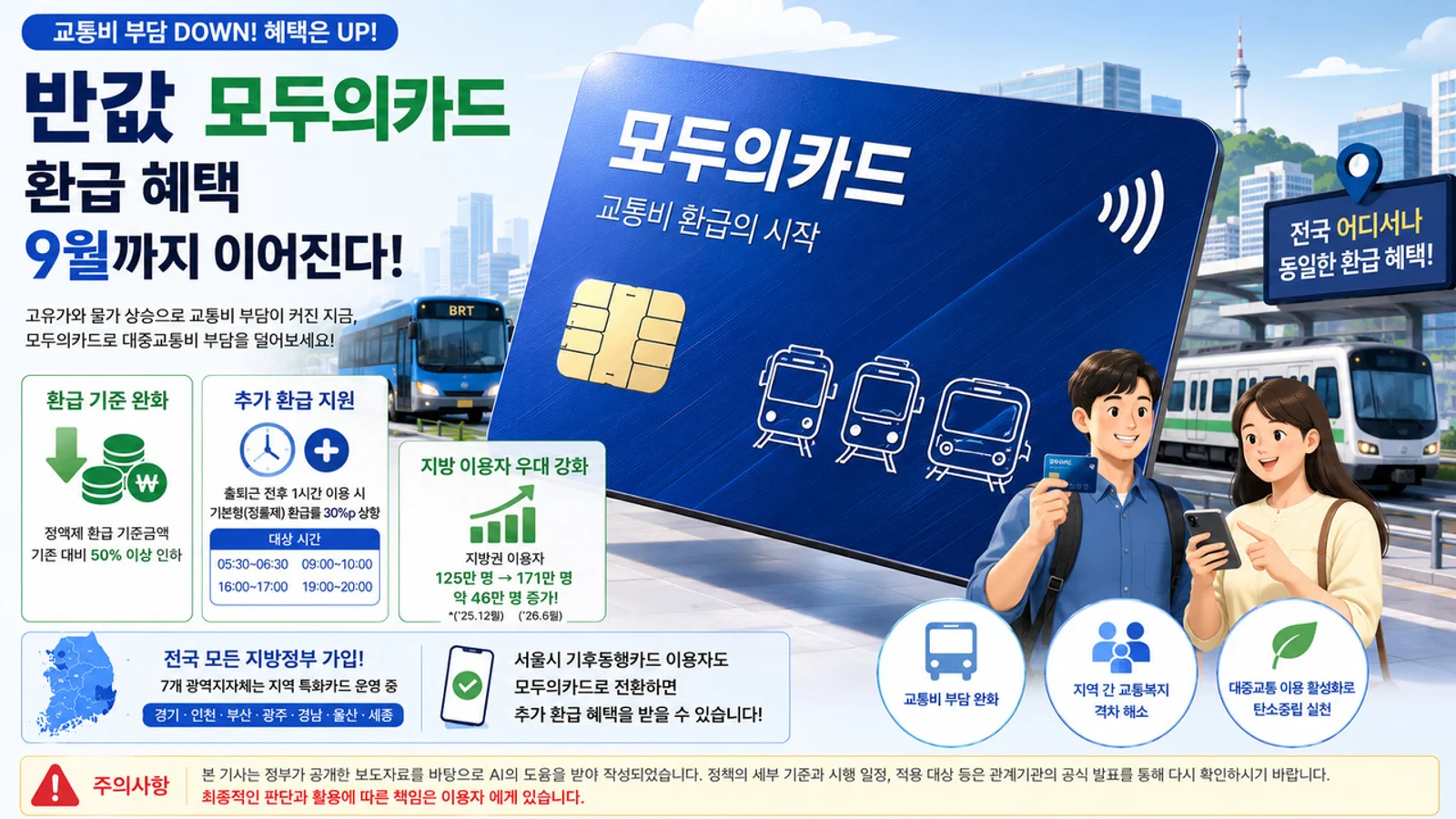
"Everyone's Card" Public Transit Refund Benefits Extended Through September... Additional Support When Switching from Seoul Climate Companion Card

July 9 Today's Fortune & Horoscope Complete Guide (By Zodiac Sign & Star Sign)

TV CHOSUN's 'What Did the King Eat?' Premieres on the 8th… Gastronomy and History on King Sejong's Table