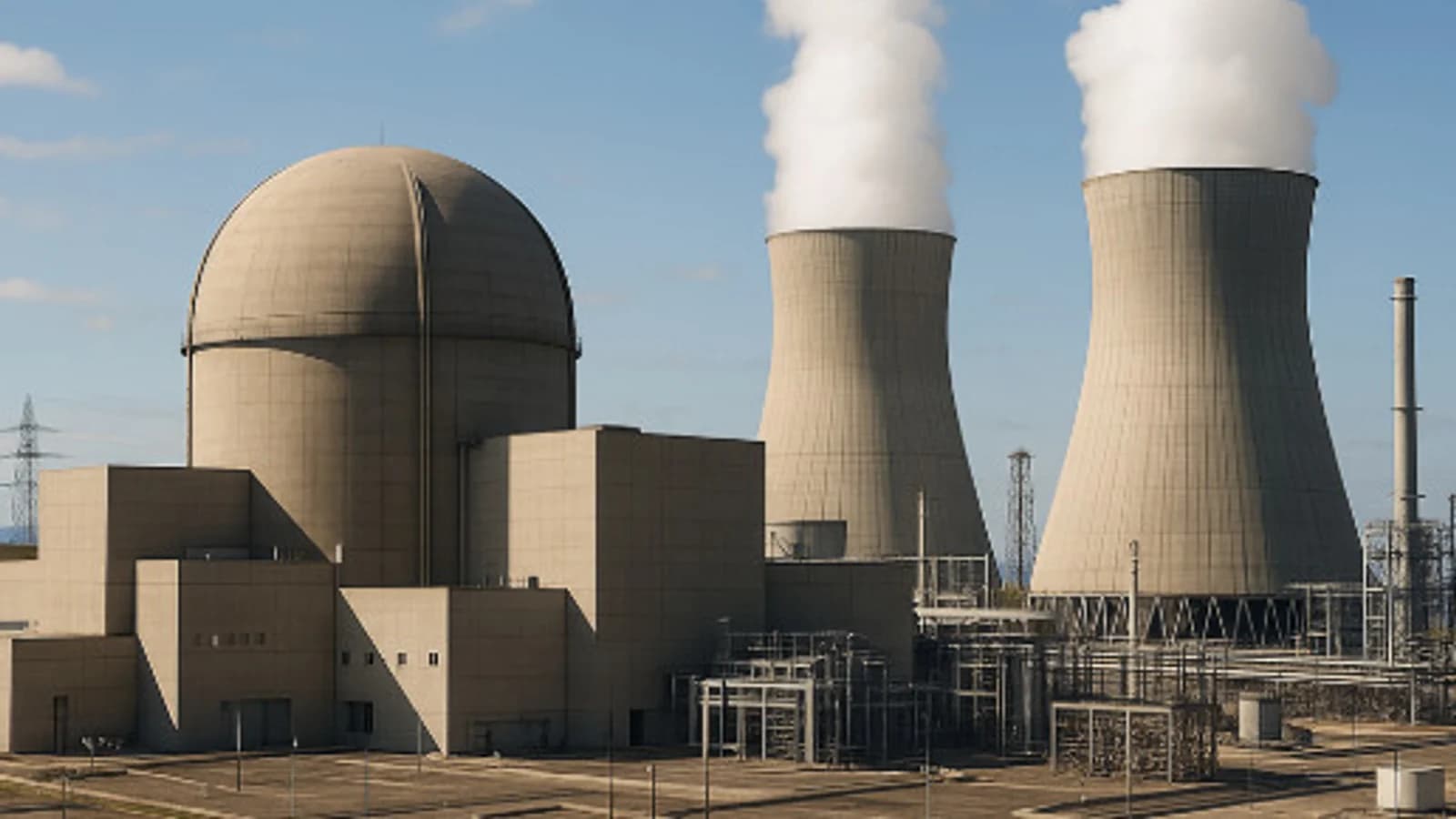
CXMT Surges 535% on First Day of Trading... How Much of a Competitive Threat to Korean Semiconductor Stocks?
Concerns are spreading that the stock market listing of Chinese memory semiconductor company ChangXin Memory Technologies (CXMT) could shake up the global DRAM

Concerns are spreading that the stock market listing of Chinese memory semiconductor company ChangXin Memory Technologies (CXMT) could shake up the global DRAM competitive landscape. With its share price far exceeding the initial public offering price on its first day of trading, the likelihood of large-scale capital flowing into China's semiconductor industry has come into focus, and the mid- to long-term competitive burden on Korean semiconductor companies has resurfaced as a matter of market interest.
Korean Stock Market Weakened Intraday Amid CXMT Listing Aftermath
According to the Chinese media outlet Azhoulia, the Korean stock market showed intraday weakness on the 27th due to the impact of CXMT's listing. The KOSPI at one point fell to the 6,557.39 level, down 1.99% from the previous trading day, but rebounded as buying interest flowed in during the afternoon. The index subsequently closed at 6,755.75, up 65.13 points from the previous trading day, while the KOSDAQ also closed at 764.86, up 2.22%.
On the day of its listing, CXMT's stock price reportedly rose from an IPO price of 8.66 yuan to as high as 55.03 yuan intraday, with the surge reaching 535% at one point. During the sharp price increase, reports emerged that its market capitalization exceeded 360 billion yuan, surpassing the Industrial and Commercial Bank of China to become the largest company by market cap among Chinese A-shares. Trading volume also recorded an unprecedented scale for a single stock, concentrating investor attention.
4th in DRAM Market Share... Capacity Expansion Expected to Accelerate with Capital Injection
What the market focused on was not simply the effect of a new listing, but CXMT's established position within the DRAM market. According to data cited in reports, CXMT holds a 7.67% share of the global DRAM market, ranking fourth behind Samsung Electronics, SK Hynix, and Micron. While the market share gap with the leading companies remains large, analyses suggest that if the Chinese government's semiconductor self-sufficiency policy combines with capital market funding, capacity expansion and technology investment could accelerate. If supply from Chinese companies increases, centered on commodity DRAM, price competition could intensify, potentially burdening the profitability of Korean memory companies.
A researcher at Shinhan Investment Corp. assessed that CXMT's rise to the top ranks of the Chinese stock market by capitalization immediately after its listing, along with the shift of funds toward the newly listed stock, was one of the factors that increased volatility in the Korean stock market.
Korean Semiconductor Stocks Rebound on AI Demand Expectations
However, the Korean semiconductor sector recovered its losses, driven by expectations of expanding global artificial intelligence infrastructure investment. As large-scale partnership plans involving Samsung Electronics and SK Hynix were announced at an AI event held in San Francisco, United States, expectations for memory semiconductor demand re-entered the market. According to reports, Samsung Electronics signed a memorandum of understanding with Broadcom for cooperation worth a total of 200 billion dollars over the next five years. SK Hynix is reported to be participating in long-term memory supply for an AI infrastructure project worth approximately 750 billion dollars, involving companies such as Nvidia and Microsoft.
Reflecting this news, Samsung Electronics closed at 254,000 won, up 1.8% from the previous trading day, and SK Hynix closed at 1,816,000 won, up 3.24%. NAVER also reportedly closed at 225,000 won, up 8.43%, as news of Nvidia's 1 billion dollar investment and a treasury stock buyback and cancellation plan worth approximately 1 trillion won gained prominence.
Going Forward: Key Factors Include China's Capacity Expansion Speed and Technology Gap
CXMT's listing is significant in that it demonstrates China's DRAM industry has moved beyond a simple catch-up phase and has secured the financial foundation necessary for production expansion. While the Korean semiconductor sector is likely to benefit from demand for High Bandwidth Memory (HBM) and AI server products for the time being, it is necessary to simultaneously monitor the pace of capacity expansion by Chinese companies, supply prices, and whether the technology gap narrows in the commodity DRAM market.
[This article is not intended to recommend the purchase or sale of any specific stock. Stock prices can fluctuate rapidly based on corporate performance, supply and demand, and market conditions, so investment decisions and responsibilities lie with the individual investor. Intraday stock prices and fluctuation rates included in the article may vary depending on the time of writing. This article was written with AI assistance.]
CBC Globe publishes verified stories with editorial review, source checks, and tenant-specific publication standards.
Related Articles
Controversy Over Single-Stock Leverage ETFs Reaches National Assembly... Financial Services Commission Chairman Lee Eok-won Attends, Clash Over Hasty Introduction and Dereliction of Duty
Sammbo Industrial Surges 19.93%... HMM, Woori Financial Group, and 15 Others Record 'Golden Cross'
![[Breaking] SPG Surges 15% as VI Triggered Twice... Defies 6% Plunge in KOSPI and KOSDAQ](/_next/image?url=https%3A%2F%2Fmedia.cbcglobe.com%2Ftenants%2Fcbc00000-0000-4000-8000-000000000001%2Fmedia%2Fcbc%2F2026%2F06%2F581911%2Fa630da1c47d6049c%2Fvariants%2Fhero.webp&w=1920&q=75)
[Breaking] SPG Surges 15% as VI Triggered Twice... Defies 6% Plunge in KOSPI and KOSDAQ