Gold Prices August 5: Pure Gold Holds at 820,000 Won... International Gold Prices Rise Alongside Wall Street Rally
Domestic Gold Price Trends (As of August 5, 2026) On August 5, 2026, according to the Korea Gold Exchange, the **purchase price of pure gold (3.75g)** stood at
Domestic Gold Price Trends (As of August 5, 2026)
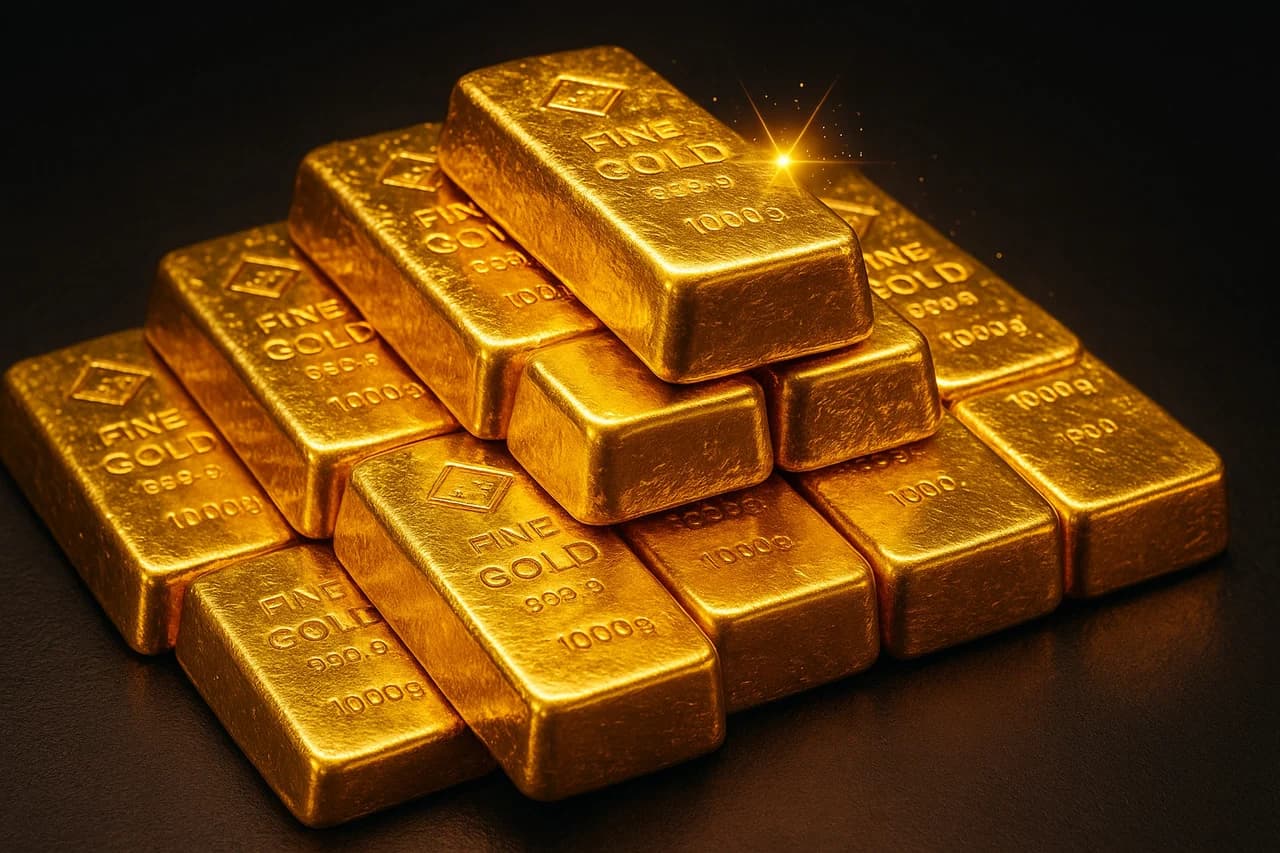
On August 5, 2026, according to the Korea Gold Exchange, the purchase price of pure gold (3.75g) stood at 820,000 won (0% change), unchanged from the previous day. The selling price was 688,000 won (0.15% change), up 1,000 won.
The 18K selling price was 505,700 won (0.14% change, +700 won), and the 14K selling price was 392,200 won (0.15% change, +600 won).
Platinum posted the largest gain of the day. The purchase price was 346,000 won (4.34% change, +15,000 won), and the selling price was 281,000 won (4.63% change, +13,000 won).
Silver also rose slightly. The purchase price was 11,320 won (0.8% change, +90 won), and the selling price was 9,560 won (0.73% change, +70 won).
---
International Gold Prices Rise Despite Wall Street Rally
International gold prices rose on this day despite a strong rally in the U.S. stock market. As of the same time, the GC COMEX gold price was trading at around $4,136 per troy ounce.
Expectations formed that U.S. inflationary pressures could ease as international oil prices fell sharply, which reduced interest rate burdens and positively affected gold prices.
---
Major Wall Street Indices Rise Across the Board
As of the morning of August 5, Korean time, the major indices were as follows:
- Dow Jones Industrial Average: 54,085.88, up 907.47 points (1.71%) from the previous trading day. Intraday high of 54,272.60, low of 53,641.21.
- S&P 500: 7,736.49, up 135.99 points (1.79%). Intraday high of 7,758.21, low of 7,629.10.
- Nasdaq Composite: 26,584.99, soaring 671.10 points (2.59%). The highest gain among major indices. Intraday high of 26,679.91, low of 26,088.04.
- Russell 2000: 3,036.33, up 54.42 points (1.83%). Intraday high of 3,043.47, low of 2,991.97.
While large-cap tech stocks, cyclical stocks, and small- to mid-cap stocks rose together, spreading buying momentum across the broader Wall Street market, gold prices also rose in tandem. Typically, when the stock market surges, the appeal of gold as a safe-haven asset may weaken. However, on this day, the market simultaneously reflected expectations of eased U.S.–Iran war risks along with demand to hedge against uncertainty.
---
U.S.–Iran Conflict: Intersection of Military Tension and Diplomatic Negotiation
The pattern of alternating military clashes and diplomatic negotiations between the United States and Iran continues.
- Outbreak of Conflict: The conflict began when the U.S. and Israel attacked Iran on February 28, 2026, lasting about five months. Ceasefires and renewed hostilities alternated repeatedly.
- Key Issues: The U.S. raised concerns over Iran's missile and nuclear capabilities as well as its support for armed groups in the Middle East, while Iran responded with attacks targeting U.S. forces, commercial vessels, and regional facilities.
- Provisional Agreement (June 2026): It included a halt to military operations, the reopening of the Strait of Hormuz, and follow-up negotiations on the nuclear issue, but was not maintained for long.
- Resumption of Blockade: Following renewed attacks on commercial vessels, the U.S. reimposed a naval blockade on Iranian ports in July. Multiple warships, including aircraft carriers, were deployed to the northern Arabian Sea.
Emergence of Prospects for a Diplomatic Solution
U.S. President Donald Trump held off on large-scale additional airstrikes against Iran, taking into account requests from Gulf region nations. Saudi Arabia, Qatar, and the United Arab Emirates reportedly conveyed concerns that further U.S. attacks could provoke Iranian retaliation, threatening Middle Eastern energy facilities and maritime shipping networks.
Normalization of Strait of Hormuz Transit Is Key
Iran and Oman are discussing a plan in which vessels enter the Gulf through an Iran-controlled lane and exit through an Oman-controlled lane. However, issues regarding lane control rights, transit fees, and the lifting of the U.S. blockade on Iranian ports remain, making it uncertain whether a final agreement will be reached.
The U.S. also acknowledged progress in negotiations while maintaining its stance that the principle of free international navigation must not be undermined.
Importance of the Strait of Hormuz: Prior to the conflict, approximately one-fifth of the world's traded crude oil and natural gas passed through this strait. The U.S. Treasury Department has also explained that about 20% of the world's energy supply moves through the strait. Disruptions to transit could increase crude oil and liquefied natural gas transportation costs, as well as insurance and logistics expenses, intensifying global inflationary pressures.
---
Complex Interconnection of Oil Prices, Interest Rates, and Gold Prices
When international oil prices rise, opposing forces act on gold prices. If inflation concerns grow due to rising energy prices, the likelihood increases that the U.S. Federal Reserve will raise interest rates to curb inflation, which burdens gold—a non-yielding asset.
In this trading session, international oil prices fell on expectations of eased Middle East tensions, partially alleviating concerns about inflation and interest rate hikes. At the same time, the possibility of failed U.S.–Iran negotiations or a resumption of military action has not completely disappeared, maintaining safe-haven demand for gold. This complex market sentiment underpins the simultaneous rise in both stocks and gold.
---
Gold's Historical Status and Central Bank Holdings
Gold has been used for thousands of years as jewelry, a medium of exchange, and a store of value. Its resistance to corrosion, limited supply, and ability to hold high value in a small volume have shaped its status as money and an asset.
From the Gold Standard to the Floating Exchange Rate System
- Late 19th Century to Before World War I: Major countries operated under the gold standard, linking the value of their currencies to a fixed amount of gold.
- Bretton Woods System (established in 1944): The U.S. dollar was linked to gold, and other currencies were pegged to the dollar. The U.S. maintained the official price of gold at $35 per troy ounce and exchanged dollars held by foreign central banks for gold.
- Suspension of Gold Convertibility (August 1971): Then-U.S. President Richard Nixon suspended the conversion between dollars and gold. Subsequently, major currencies transitioned to a floating exchange rate system where values are determined by the market.
A Core Reserve Asset for Central Banks
Gold is a physical asset that does not depend on the payment promises of any specific country or company, and thus carries no credit risk.
- World Gold Council's 2026 Central Bank Gold Reserves Survey: 89% of respondents predicted that global central bank gold holdings would increase over the next 12 months.
- Major reasons for holding gold: Performance during crises (90%), long-term store of value (84%), and portfolio diversification benefits (82%).
- Gold holdings by central banks and public institutions were estimated at approximately 39,000 tons as of 2025.
In particular, central banks in emerging markets are placing high strategic value on gold holdings amid growing risks of fragmentation in international financial markets and sanctions.
---
Factors That Could Drive Gold Prices Down Also Exist
Gold prices do not always rise during wars or financial instability. They can decline depending on U.S. Treasury yields, the value of the dollar, central bank monetary policy, and investors' moves to secure cash.
- Since gold pays no interest or dividends, the opportunity cost increases when U.S. real interest rates rise.
- Conversely, lower U.S. interest rates or a weaker dollar create a favorable environment for gold prices.
- If oil prices surge during a war, driving up prices, gold may gain attention as an inflation hedge asset. However, if this leads to aggressive interest rate hikes, gold prices could come under pressure.
---
Key Variables Going Forward
1. Outcome of U.S.–Iran Negotiations and Restoration of Strait of Hormuz Transit: If transit normalization and a easing of military tensions are confirmed, gold's geopolitical risk premium could shrink. Conversely, a breakdown in negotiations and the resumption of additional airstrikes or retaliatory attacks could expand volatility in physical assets once again. 2. U.S. Employment Indicators and Federal Reserve Monetary Policy: Markets are expected to gauge the direction of interest rates through U.S. private employment, nonfarm payrolls, and wage growth figures. If employment and inflation figures come in strong, raising expectations of rate hikes, it would be a burdensome factor for gold prices. If signs of an economic slowdown are confirmed, gold demand could expand again.
Currently, it is difficult to view gold prices as reflecting solely war fears. International oil prices, inflation, U.S. interest rates, the value of the dollar, and the need for central banks to diversify foreign exchange reserves are all simultaneously influencing the price. As the U.S.–Iran conflict oscillates between military escalation and diplomatic compromise, gold is once again drawing attention as both a millennia-old store of value and a risk-diversifying asset in modern financial markets.
[※ This article is not intended to solicit investment. The final judgment and responsibility for investments lie with the investor, and this publication bears no responsibility for investment outcomes.]
CBC Globe publishes verified stories with editorial review, source checks, and tenant-specific publication standards.
Related Articles
![[Breaking] Korea Electric Cable Announces Revised Disclosure: Transaction Volume with Hoban Industries and Affiliates Changed to KRW 25.345 Billion](/_next/image?url=https%3A%2F%2Fmedia.cbcglobe.com%2Ftenants%2Fcbc00000-0000-4000-8000-000000000001%2Fmedia%2Fcbc%2F2026%2F07%2F587626%2F362af6d78adda143%2Fvariants%2Fhero.webp&w=1920&q=75)
[Breaking] Korea Electric Cable Announces Revised Disclosure: Transaction Volume with Hoban Industries and Affiliates Changed to KRW 25.345 Billion
OCI Holdings Surges Over 10%... Volatility Interruption (VI) Triggered Successively During and Before Trading Hours
Nuclear and Power Equipment Stocks Rally Together... Doosan Enerbility and Others Surge