
FMS 2026 Reveals First HBF Standards... SK hynix and SanDisk Sketch Next-Gen AI Memory Roadmap with Google DeepMind
At FMS (Future of Memory and Storage) 2026, held from June 4 to 6 (local time) in Santa Clara, California, USA, over 3,500 attendees and approximately 350 AI ex
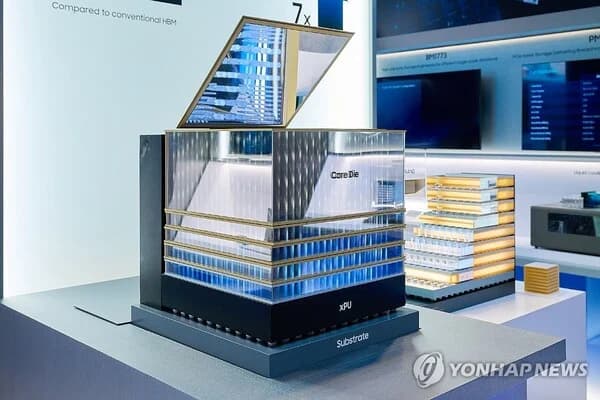
At FMS (Future of Memory and Storage) 2026, held from June 4 to 6 (local time) in Santa Clara, California, USA, over 3,500 attendees and approximately 350 AI experts gathered to share the latest trends in memory and storage technology. With major global companies including Samsung Electronics, SK hynix, Micron Technology, and SanDisk participating in large numbers, SK hynix presented the direction of next-generation AI infrastructure architecture centered on hierarchical memory.
Limits of Single Memory... Organic Connection Between Tiers is Key
In their keynote on the first day, Kim Cheon-seong, Head of Solution Development at SK hynix, and Kang Wook-seung, responsible for next-generation product planning, emphasized that as the era of AI agents takes off in earnest, it is difficult to meet data processing demands with a single memory product alone. They assessed that a structure that organically connects and optimizes various memory tiers—including HBM, DRAM, NAND (HBF), and SSD—determines the efficiency of the entire infrastructure. Kim explained, "In the expansion toward Agentic AI and large-scale inference environments, the deployment and connection method of each tier is key to minimizing data movement."
HBF Emerges as a New Memory Tier Between HBM and SSD
The most spotlighted technology in the hierarchical memory structure was High Bandwidth Flash (HBF). HBF serves as an intermediary between HBM and SSD, combining the fast computational data supply speed of HBM with the large-capacity storage characteristics of NAND flash. While HBM offers speed, it has limitations in price and capacity expansion; in contrast, HBF, being NAND-based, can store more data while providing DRAM-level bandwidth. It is expected to be utilized as an auxiliary memory that efficiently manages data frequently used by AI.
SK hynix-SanDisk Consortium Reveals First Standard Specification
SK hynix and SanDisk unveiled the first standard specification for HBF to coincide with the opening of the event, approximately six months after launching their consortium in February of this year. Google and AI semiconductor company Tenstorrent are also participating in the standardization efforts.
Xiaoyu Ma, a researcher at Google DeepMind, projected during a panel discussion that the semiconductor market for AI inference will grow more than tenfold over the next decade. He explained that the spread of multimodal technology and the increase in KV cache data have significantly raised the memory capacity and performance requirements for AI services.
Lim Ui-cheol, head of Solution AT at SK hynix, stated during a panel session with Google, SanDisk, and others that HBF has the potential to establish itself as a new memory tier between HBM and SSD. HBF is characterized by applying TSV (Through-Silicon Via) technology to simultaneously realize the large-capacity features of existing storage and bandwidth comparable to DRAM. SanDisk added that with the introduction of HBF, AI can efficiently manage previous conversation history, thereby increasing response speed and reducing the burden on GPU usage.
Exhibition Booth: From Partnership Zone to Next Gen. Tech
The exhibition booth was divided into the Partnership Zone, Smart Edge, Next Gen. Tech, and Tech Sessions. In the Partnership Zone, a model of Nvidia's next-generation AI accelerator 'Vera Rubin' was displayed alongside various HBM products including HBM4, HBM4E, and HBM3E, the low-power DRAM server module SOCAMM2, Dell's server system 'R7625' with 64GB DDR5 RDIMM, and the eSSD 'PS1110 E3.S'.
In the Smart Edge Zone, a 375-layer 4D NAND wafer applying the wafer bonding process for the first time was revealed, and based on this, mass production of high-performance eSSDs is planned for the first half of next year. High-density packaging technologies such as 375-layer 1Tb TLC 154B 32DP and 375-layer 1Tb TLC 334B QDP were also showcased.
In the Next Gen. Tech Zone, CXL-based memory technologies were demonstrated. A demo of a distributed AI agent serving system connecting multiple servers and GPUs using CXL Pooled Memory was held, and a technology for efficient storage and reuse of large-scale KV cache through CMM-Hybrid, which combines DRAM and SSD, was also introduced. A CMM-Ax-based system had its performance in ultra-long context processing recognized and was accepted as an academic conference paper.
An SK hynix official said, "Through this FMS 2026, we have demonstrated our technological capabilities across all tiers, including HBM, server DRAM, NAND, and CXL," adding, "We will proactively develop the optimal AI memory solutions that our customers and partners need."
CBC Globe publishes verified stories with editorial review, source checks, and tenant-specific publication standards.
Related Articles

Cashwalk Money-Earning Quiz August 8 Answers Summary — FIX Big Fan·CJ The Cepé Edition

'You Quiz on the Block' Features Lee Eun-gyeol and Lee Seung-cheol... Takes No. 1 Ratings, Christopher Nolan and Matt Damon Set to Appear Next Week

LE SSERAFIM's Huh Yunjin, CORTIS, and KATSEYE Named in U.S. Variety's '2026 Young Hollywood Impact'