U.S. July Employment Down 23,000... Brakes Put on Expectations for Fed Rate Hike in September
Recently, the Federal Reserve (Fed) maintained its benchmark interest rate at 3.50–3.75% for the fifth consecutive time at its July Federal Open Market Committe
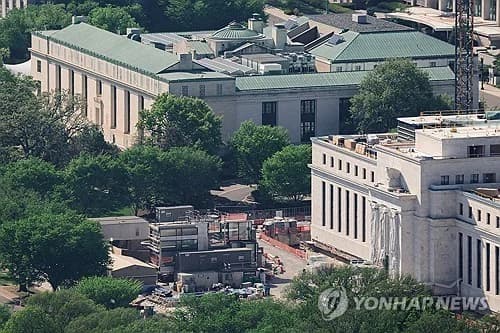
Recently, the Federal Reserve (Fed) maintained its benchmark interest rate at 3.50–3.75% for the fifth consecutive time at its July Federal Open Market Committee (FOMC) meeting. During this process, three regional Federal Reserve Bank presidents—Hammack, Kashkari, and Logan—dissented, arguing for the need to raise interest rates. With new Fed Chair Kevin Warsh refraining from providing forward guidance, the market had anticipated that a strong July employment report would fuel discussions of a rate hike at the September FOMC. However, contrary to expectations, the U.S. labor market indicators for July showed a pronounced weakness.
July Employment Down 23,000... May–June Figures Revised Sharply Lower According to the employment report released by the Bureau of Labor Statistics (BLS) on the 7th (local time), nonfarm payroll employment decreased by 23,000 in July compared to the previous month. This fell significantly short of the market consensus (an increase of 83,000) compiled by Dow Jones and others, and also showed a clear slowdown compared to the average monthly gain of 34,000 over the past year. Furthermore, the employment figures for May and June were revised sharply downward. May was revised from a previously reported increase of 129,000 to an increase of 63,000, and June was revised from an increase of 57,000 to an increase of 20,000, effectively erasing a total of 103,000 jobs from the statistics over the two-month period. The BLS explained that the revisions were due to the incorporation of reports from new businesses and establishments, as well as recalculations of seasonal adjustments.
Employment Trends by Industry and Qualitative Labor Market Indicators By industry, local government education saw the largest decline with a loss of 50,000 jobs, and retail trade also shed 19,000 jobs. Notably, general merchandise retail (warehouse clubs, superstores, etc.) lost 21,000 workers, while gasoline stations cut 5,000. The financial sector lost 14,000 jobs, bringing the cumulative decline to 121,000 since its peak in May 2025. Meanwhile, the healthcare sector added 22,000 jobs, though this fell short of the trailing one-year average of 36,000.
- Qualitative indicators for wages and employment are as follows:
- Wages: Average hourly earnings rose by just 2 cents month-over-month to $37.62, representing a 3.2% increase year-over-year.
- Unemployment and Participation Rates: The unemployment rate edged down slightly to 4.1% from the previous month's 4.2%. However, the labor force participation rate stood at 61.4% and the employment rate at 58.9%, down 0.7 percentage points and 0.5 percentage points, respectively, since January of this year.
- Quality of Employment: Temporary layoffs rose by 153,000 to a total of 921,000. The number of long-term unemployed (27 weeks or more) stood at 1.8 million, accounting for 25.5% of all unemployed, while 'discouraged workers' who gave up their job search also reached 476,000. This is why critics argue that the labor market situation cannot be interpreted positively based on the unemployment rate alone.
September Rate Hike Halted... Focus Shifts to Upcoming Key Economic Indicators With this employment report underperforming expectations and May–June figures being revised sharply downward, assessments suggest that the prevailing understanding of recent labor market strength needs to be reconsidered. As a result, the forecast that the possibility of a rate hike at the September FOMC may be put on hold is gaining traction. However, as the Fed under Chair Kevin Warsh is not providing clear forward guidance, there is also a strong call for caution, noting that policy direction can only be gauged after comprehensively reviewing additional economic data leading up to the September 15–16 FOMC meeting. Market attention is now focused on the upcoming August Consumer Price Index (CPI, to be released on the 12th), the Producer Price Index (PPI, on the 13th), and the minutes of the July FOMC meeting (on the 19th).
CBC Globe publishes verified stories with editorial review, source checks, and tenant-specific publication standards.
Related Articles

'You Quiz on the Block' Features Lee Eun-gyeol and Lee Seung-cheol... Takes No. 1 Ratings, Christopher Nolan and Matt Damon Set to Appear Next Week

LE SSERAFIM's Huh Yunjin, CORTIS, and KATSEYE Named in U.S. Variety's '2026 Young Hollywood Impact'

Saturday, August 8 Chinese Zodiac Horoscopes: Complete Guide to Overall Fortune, Love, Wealth, Health, Lucky Colors, and Numbers