
Seoul City Formulates Second Supplementary Budget of 2.8061 Trillion Won... 66.6% for Statutory Mandatory Expenditures, 810 Billion Won for Youth, Welfare, and Safety
The Seoul Metropolitan Government has allocated 2.8061 trillion won for its second supplementary budget of this year. Of the total supplementary budget, 1.8698 trillion won, or 66.6%, has been assigned as statutory mandatory expenditures, while 810 billion won will be concentratedly invested in sect
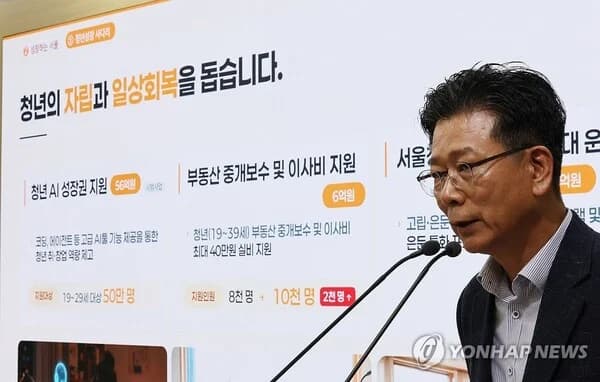
The Seoul Metropolitan Government has allocated 2.8061 trillion won for its second supplementary budget of this year. Of the total supplementary budget, 1.8698 trillion won, or 66.6%, has been assigned as statutory mandatory expenditures, while 810 billion won will be concentratedly invested in sectors with high public visibility, including welfare, housing, youth, future industries, and daily safety.
- [Supplementary Budget Scale and Revenue Structure]
- Budget Scale: At 2.8061 trillion won, it represents 5.2% of this year's existing budget of 53.7674 trillion won. If passed as originally proposed, Seoul City's total budget for this year will increase to 56.5735 trillion won.
- Statutory Mandatory Expenditures of 1.8698 trillion won: Includes 917.9 billion won in support funds for autonomous districts and the Office of Education, and 886.3 billion won in contributions to the Comprehensive Fiscal Stabilization Fund and the Housing Development Fund.
- Public Visibility Investment of 810 billion won: Allocated across three sectors: 'Seoul Together' (welfare and housing), 'Growing Seoul' (youth and future industries), and 'Livable Seoul' (daily safety, childcare, and health).
[Seoul Together] 409.7 billion won Funds will be invested in expanding livelihood and medical benefits, broadening housing benefit eligibility, providing medical support for vulnerable groups, acquiring public rental housing near transit stations, and upgrading facilities at Eunpyeong Hospital and Seonam Hospital.
- [Growing Seoul] 231.9 billion won
- Providing generative AI usage vouchers to 500,000 youth for one year: 5.6 billion won
- Expanding electric vehicle purchase subsidies and increasing rapid chargers for electric buses: 40.3 billion won
- Expanding eligibility for youth real estate brokerage fee and moving cost support
- Promoting the Seoul Regional Innovation-led University Support System: 1.7 billion won
- Nighttime economy revitalization projects: 1.1 billion won for Moonlight Gift Certificates, 200 million won for Unhyeon Palace nighttime cultural programs, and others.
- [Livable Seoul] 168.4 billion won
- Constructing and expanding rainwater pump stations, installing a rainwater retention basin at Siheung Valley: 8.2 billion won
- Replacing aging electric trains: 17.7 billion won
- Supporting medical expenses for pregnant women: 4.1 billion won
- Supporting first-meeting vouchers: 3.1 billion won
- Home childcare allowance: 1.1 billion won
- Sports class vouchers for people with disabilities: 1 billion won
- Expanding direct-run centers for Seoul Fitness 9988: 600 million won
[Youth Support: Expanding AI Growth Vouchers and Moving Cost Support] A new 'Youth AI Growth Voucher' program will be launched, allowing 500,000 students and job seekers aged 19 to 29 to use advanced AI services, including generative AI, for one year. The eligibility for real estate brokerage fee and moving cost support for youth (aged 19 to 39) will also be expanded from 8,000 to 10,000 recipients. Kim Chul-hee, Director of the Future Youth Planning Office, stated that, given its pilot nature, the program will initially target those aged 19 to 29, with plans to establish selection criteria reflecting the diverse characteristics of youth, including university students, job seekers, and young professionals.
[Nighttime Economy Revitalization] The nighttime economy revitalization policy, one of the core initiatives of Mayor Oh Se-hoon's 9th popularly elected term, has also been included in this supplementary budget. A 10-billion-won scale 'Moonlight Gift Certificate' (tentative name), usable at five Moonlight Night Market zones, will be issued at a 10% discount. At Namsan, various events are planned for October and November, including 'Namsan Camp-nic,' combining camping and picnicking, autumn foliage walks, and silent headset parties. A nighttime traditional culture program at Unhyeon Palace and the creation of a firefly garden at Namsan will also be pursued.
- [Daily Safety and Response to Low Birth Rates]
- Safety Infrastructure: Constructing and expanding rainwater pump stations in Yangjae 2, Yeongdeungpo, and Geumho; installing a rainwater retention basin in the Siheung-dong area; replacing 368 aging electric train cars on subway lines 6 and 7; and expanding the scope of regular inspections at demolition sites.
- Childbirth and Childcare: Eligibility for outpatient and examination fee support for pregnant women aged 35 and older will be expanded from 20,000 to 28,000 beneficiaries, and 1,876 additional recipients will be covered by first-meeting vouchers. Sports class vouchers for people with disabilities and direct-run centers for Seoul Fitness 9988 will also be expanded.
[Background for Budget Formulation and Future Schedule] The Seoul Metropolitan Government explained that while macroeconomic indicators are improving due to recent growth in the AI and semiconductor industries, challenges felt by citizens, such as youth employment difficulties and the burden of housing and living costs, persist. It added that financial resources have therefore been distributed across various sectors, including welfare, housing, youth, and future industries. The supplementary budget bill will be submitted to the Seoul Metropolitan Council on the 10th and will undergo a review process. Lee Dong-ryul, Acting Director General of the Planning and Coordination Office of Seoul City, stated that essential fiscal needs, such as statutory mandatory expenditures and matching funds for national government-subsidized projects, were reflected first, and that limited available resources were concentrated on restoring livelihoods, driving future growth, and strengthening daily safety. He also expressed commitment to ensuring that citizens can feel the changes through swift execution following the council's deliberation and approval.
CBC Globe publishes verified stories with editorial review, source checks, and tenant-specific publication standards.
Related Articles
KOSDAQ Index Surges Over 5%... 18th Buy-Side Sidecar of the Year Triggered, Temporarily Halting Trading
Apple Tests Chips from China's CXMT... Supply Chain Diversification vs. U.S. National Security Concerns
Following Stone Falling Incident at Pohang Steel Yard, Pro Football Federation Orders Emergency Safety Inspections for All Clubs... Heightened Vigilance on Aging Stadium Safety Management