
Bitcoin (BTC) Is 'Digital Gold'... An Independent Asset Built on the Scarcity of 21 Million Coins and a Decentralized Network
Bitcoin is no longer an asset evaluated solely within the cryptocurrency market. Every time global liquidity shifts and interest rates and the dollar's value fluctuate, investors turn their eyes to Bitcoin, which has established it as a variable connecting traditional financial markets with the digi
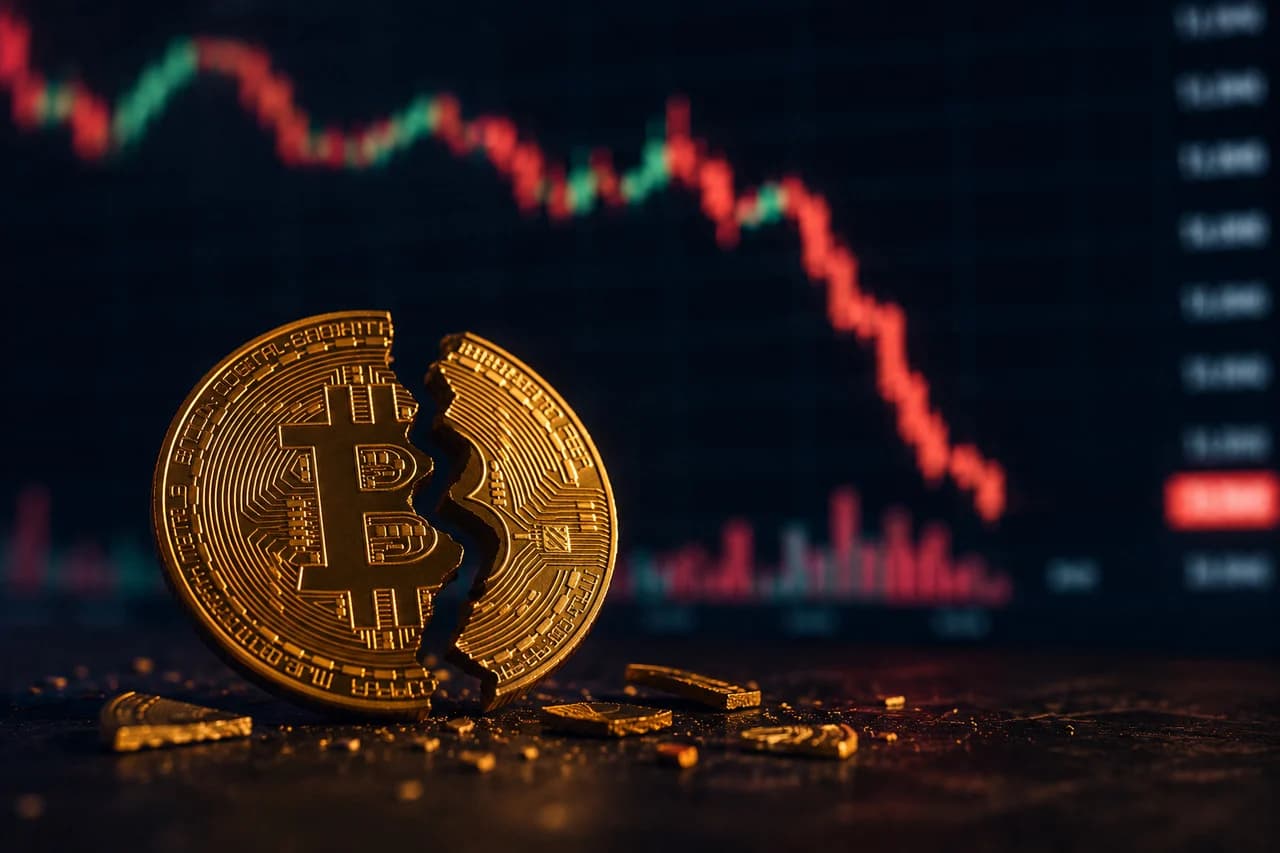
Bitcoin is no longer an asset evaluated solely within the cryptocurrency market. Every time global liquidity shifts and interest rates and the dollar's value fluctuate, investors turn their eyes to Bitcoin, which has established it as a variable connecting traditional financial markets with the digital asset market. While price volatility remains high, the way the market interprets Bitcoin has gradually shifted from an experimental digital currency to an independent asset class.
The '21 Million' Supply Cap: Why Bitcoin Is Compared to Gold
The most powerful feature distinguishing Bitcoin from other digital assets is its supply structure. The maximum issuance is capped at 21 million coins, meaning no specific institution or government can increase the supply as needed. This marks a clear difference from fiat currency systems, in which central banks adjust the money supply according to economic conditions and inflation.
The market often compares this limited supply to gold. While gold has long served as a store of value based on its physical scarcity, Bitcoin has received similar evaluations as a digital asset whose scarcity is set by protocol. The very fact that its supply growth rate is predetermined serves as an important basis for the long-term holding thesis.
A Network with 'No Issuing Entity': More Important Than the Number
However, it is difficult to explain Bitcoin's competitiveness solely through the number 21 million. More important is its network structure, which does not depend on any specific issuing entity. Rather than relying on a central authority to approve transactions or manage supply, Bitcoin operates through verification by participants distributed around the world. The key point is that it is designed so that no single country or financial institution can arbitrarily change the rules of the entire network.
This structure also differentiates Bitcoin from other major cryptocurrencies. While Ethereum expands around smart contracts and its application ecosystem, and XRP emphasizes payment and remittance efficiency, Bitcoin focuses on a relatively simple purpose. Rather than adding various functions, its central axis lies in enabling the secure transfer and holding of a scarce asset in the digital environment.
Ultimately, Bitcoin's value depends less on how many services it provides and more on whether its network rules can be maintained over the long term and how much market participants trust those rules. The combination of supply limits, decentralized operation, transparency of transaction records, and independence of asset movement has created an investment logic unique to Bitcoin.
Interest Rates, the Dollar, Liquidity... Macro Variables Moving Bitcoin
Macroeconomic conditions are another key factor driving Bitcoin's price. When markets are flush with capital and investors' risk appetite expands, funds can flow rapidly into digital assets, including Bitcoin. Conversely, when interest rates rise and preference for safe assets strengthens, liquidity may contract, increasing the likelihood of greater price volatility.
The dollar's movement is also important. When the dollar strengthens in global financial markets, investment demand for non-dollar assets may weaken; conversely, when the dollar weakens or anxiety over currency values grows, interest in scarce assets may rise. Ultimately, this means Bitcoin is not a completely independent asset that moves separately from the liquidity environment of the broader financial market.
Growth Asset or Scarce Asset... A Dual Nature
Geopolitical tensions and changes in trust in the financial system can also shake the narrative surrounding Bitcoin. While it cannot be assumed that Bitcoin always behaves like a safe asset in times of crisis, it is sometimes cited as an alternative asset because it can be held and transferred in ways different from existing financial networks. On the other hand, when market shocks intensify, investors may rush to secure cash, leading to situations where even Bitcoin is sold off alongside other assets.
For this reason, Bitcoin is an asset that is difficult to define by a single character. It can move like a growth asset when risk appetite is strong, and it can draw attention as a scarce asset when anxiety over currency values or the financial system comes to the fore. Even for the same Bitcoin, the evaluation criteria investors apply change depending on market conditions.
Institutional Investor Inflows: A Variable Reshaping Market Structure
The expanding participation of institutional investors is also a factor changing market structure. The Bitcoin market, once dominated by retail investors, is gradually connecting with mainstream finance, diversifying both trading methods and capital inflow channels. This can positively contribute to expanding the market's scale, but it also means the market may become increasingly influenced by the movements of traditional assets such as global stock and bond markets.
When examining Bitcoin's trajectory, it is necessary to look at structural market changes alongside price forecasts. Whether network security is maintained, how supply and demand between long-term holders and short-term investors move, whether institutional capital continues to flow in, and how regulatory environments in various countries evolve are all important factors for judgment.
The Remaining Task: Proving Trust Beyond 'Scarcity'
Above all, for Bitcoin to maintain its market position over the long term, it must continue to prove its credibility as a real asset beyond the logic of being 'scarce.' Amid the emergence and disappearance of countless digital assets, the background to Bitcoin's sustained high recognition and liquidity lies in its history as the oldest blockchain network and its powerful market network effects.
Ultimately, the core question surrounding Bitcoin is not simply how far its price will move. The more fundamental issue is how much standing a decentralized digital asset with limited supply can secure within the global financial market. While it is unknown whether Bitcoin will become an asset that completely replaces existing currencies and gold, it is clear that it has become a presence that can no longer be excluded when discussing monetary policy, global liquidity, and the movement of institutional capital.
[Cryptocurrencies are subject to very high price volatility, and investment losses may occur due to technological changes, regulations, market supply and demand, and other factors. Investment decisions and responsibilities rest with the investor. This article was written with AI assistance.]
CBC Globe publishes verified stories with editorial review, source checks, and tenant-specific publication standards.
Related Articles
Solana (SOL) Evaluation Standards Shift: Real-World Use, Not Just 'Speed,' Becomes the Deciding Factor; US-Iran Tensions Also a Variable

Ethereum (ETH) Beyond Price: 'Foundation of the Digital Economy'... Scalability and Competition Remain Key Challenges
Ripple and XRP: What's the Difference… Key Distinctions and Variables to Check Before Investing