
Ethereum (ETH) Beyond Price: 'Foundation of the Digital Economy'... Scalability and Competition Remain Key Challenges
Ethereum (ETH) is no longer viewed merely as a price-driven asset. As the foundation on which countless blockchain services and financial applications operate, Ethereum is less a single coin and more a platform driving the digital economy. While Bitcoin grew by emphasizing scarcity and store-of-valu
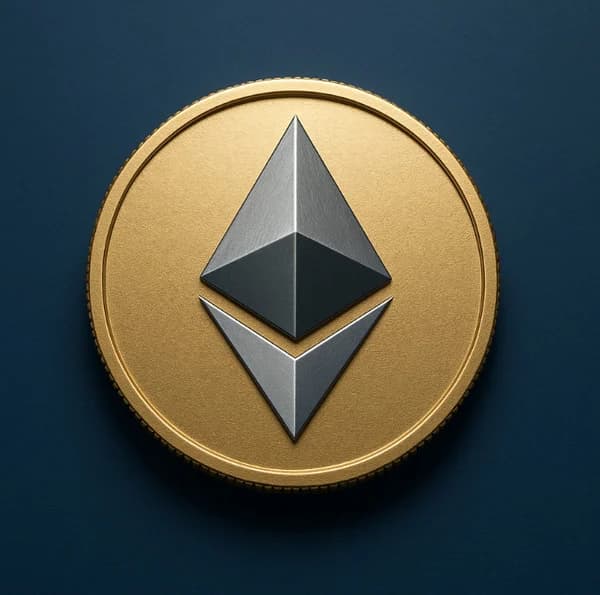
Ethereum (ETH) is no longer viewed merely as a price-driven asset. As the foundation on which countless blockchain services and financial applications operate, Ethereum is less a single coin and more a platform driving the digital economy. While Bitcoin grew by emphasizing scarcity and store-of-value characteristics, Ethereum has built an entirely different domain by prioritizing practical functionality and utility.
A Platform for Running Programs on the Network
Ethereum occupies a special position because it can execute programs directly on its network. Using smart contracts that operate automatically according to pre-defined conditions, financial transactions and digital contracts can be implemented without any central administrator.
On this basis, a wide range of services have been built, including decentralized exchanges, lending services, derivatives, NFTs, blockchain games, digital authentication, and real-world asset tokenization. Ultimately, Ethereum's value is difficult to assess based on ETH alone. What matters is how many users and developers are active on the network and how actively capital and services are moving. The structure is such that as the ecosystem expands, ETH's utility can grow along with it.
An Asset with the Character of a 'Network Usage Right'
Due to these characteristics, ETH can also be viewed as an asset similar to a network usage right. Users must pay fees to process transactions or execute specific services on Ethereum, and ETH is used for this purpose. In other words, ETH functions both as an investment vehicle traded on exchanges and as a core resource that powers the network itself.
This is an important factor that distinguishes Ethereum from other crypto assets. When market sentiment is favorable, it is not only investment demand that increases; if usage of decentralized finance, NFTs, or tokenization markets grows, ETH demand arising from network usage may also emerge. This means that price and real-world usage can become interlinked to a certain extent.
Remaining Challenges: Scalability and Transaction Costs
However, this structure does not always work as an advantage. If the number of Ethereum users grows significantly, network congestion can occur, and transaction processing costs may rise sharply. Indeed, during periods when markets overheated or usage of specific services surged, gas fee burdens expanded considerably, repeatedly causing ordinary users to hesitate before transacting.
Processing speed has also long been cited as a challenge that needs to be resolved. When large numbers of users access the network simultaneously, transactions can back up, potentially creating a structure in which higher fees must be offered for priority processing. The phenomenon of costs rising as user numbers grow is a clear burden in the push toward mainstream adoption.
For this reason, Ethereum's competitiveness is not determined simply by growing its user base. How many transactions can be processed stably and at low cost is becoming increasingly important. If network scalability is not improved, there is a possibility that user inconvenience will actually expand as the ecosystem grows.
Layer 2 and Competing Networks
The Layer 2 ecosystem emerged to address this problem. It is an attempt to increase throughput and reduce cost burdens through methods such as processing some transactions outside Ethereum's main network and recording only the final results. Ethereum's future competitiveness is closely tied to how naturally these scaling technologies take hold and improve the user experience.
Meanwhile, in the current blockchain market, competing networks that threaten Ethereum's position continue to multiply. Platforms touting faster processing speeds and lower fees are attracting developers and users, and some are evaluated as offering more convenient environments than Ethereum in certain sectors. In effect, this is not an environment in which Ethereum can defend its current position on first-mover advantages alone.
Ecosystem Assets That Are Difficult to Replace
Nevertheless, Ethereum possesses assets that are not easily replaced: a developer ecosystem built over a long period, diverse applications, abundant liquidity, and recognition earned in global markets. In blockchain platforms, already-established services, users, and developer networks are just as important as technical specifications. The scale of such an ecosystem can serve as an entry barrier that new competitors would find difficult to overcome in the short term.
In particular, real-world asset tokenization, which is drawing growing interest from the financial sector, is also a key area for assessing Ethereum's future utility. As traditional assets such as bonds, funds, and real estate move into blockchain environments, which network occupies the center of issuance, trading, and settlement becomes increasingly important. If Ethereum secures a leading position in this market, it has the potential to establish a new growth foundation connecting it to mainstream digital finance, beyond existing decentralized finance.
Beyond Price: Long-Term Criteria for Judgment
Ultimately, judging Ethereum's future simply on whether the price of ETH will rise or fall has its limitations. Over the long term, network usage, developer activity, Layer 2 scaling, fee efficiency, the gap with competing chains, and the degree of connection with traditional financial markets may serve as more important criteria for judgment.
Ethereum has already formed a massive ecosystem within the crypto asset market. The key going forward lies in how effectively it connects the influence it has built so far to real economic activity and sustained network demand. The possibility of establishing itself as the central infrastructure of digital finance remains open, but to maintain that status, it must continue to improve scalability and cost issues and prove stronger ecosystem effects than competing platforms.
[Crypto assets are subject to extreme price volatility, and investment losses may occur due to technological changes, regulations, market supply and demand, and other factors. Investment decisions and responsibilities rest with the investor. This article was written with AI assistance.]
CBC Globe publishes verified stories with editorial review, source checks, and tenant-specific publication standards.
Related Articles

Bitcoin (BTC) Is 'Digital Gold'... An Independent Asset Built on the Scarcity of 21 Million Coins and a Decentralized Network
Solana (SOL) Evaluation Standards Shift: Real-World Use, Not Just 'Speed,' Becomes the Deciding Factor; US-Iran Tensions Also a Variable
Ripple and XRP: What's the Difference… Key Distinctions and Variables to Check Before Investing