
Solana (SOL) Price Consolidates in the $90 Range... Ecosystem Scalability Is Key Amid Fast Speed and Low Cost Strengths
Solana (SOL) is continuing a short-term correction with volatility in the $90 range. While the high-performance layer 1 (L1) blockchain leverages its technological strengths to expand its ecosystem into decentralized finance (DeFi), memecoin trading, payments, and gaming, a key challenge ahead is ho
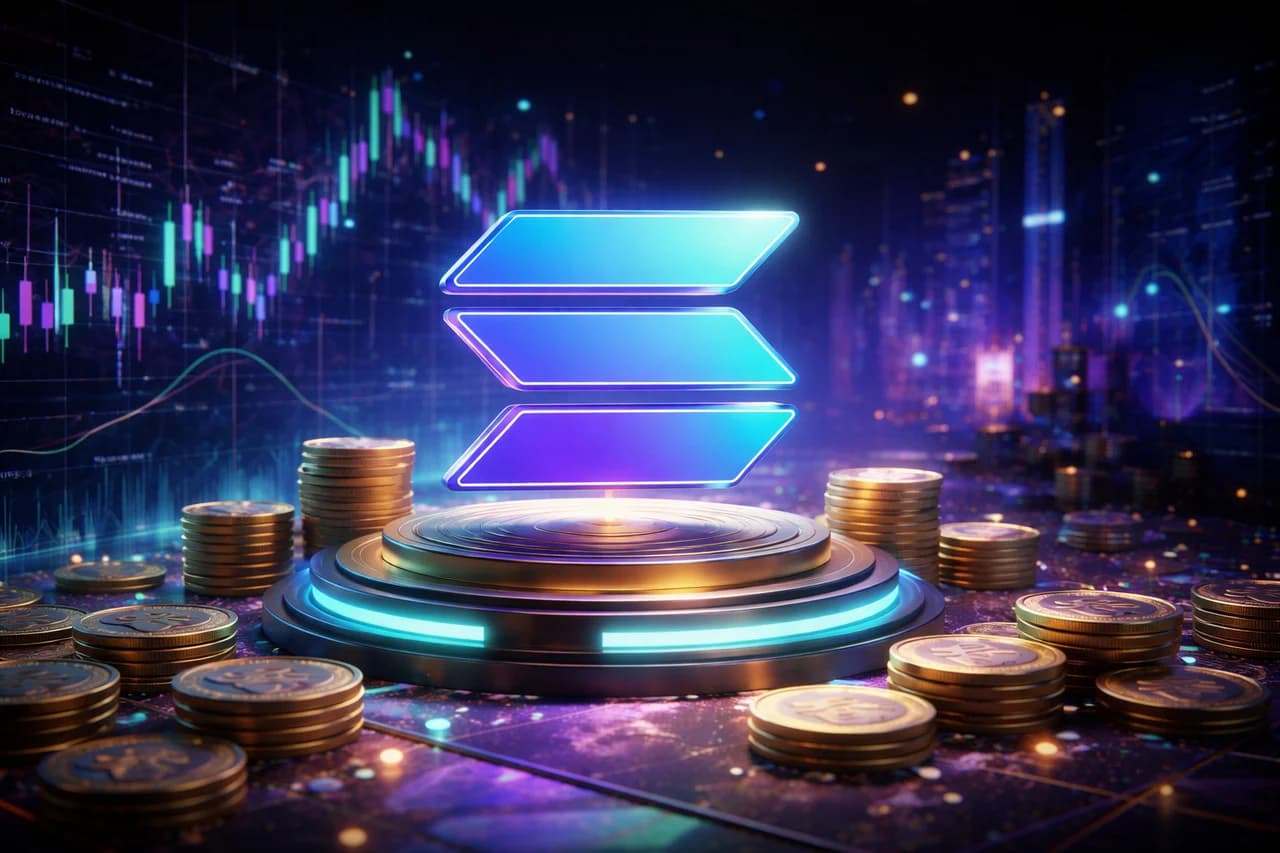
Solana (SOL) is continuing a short-term correction with volatility in the $90 range. While the high-performance layer 1 (L1) blockchain leverages its technological strengths to expand its ecosystem into decentralized finance (DeFi), memecoin trading, payments, and gaming, a key challenge ahead is how much increased network usage translates into SOL's value.
Solana Moves at $93.18... Down 0.82% Over 24 Hours
As of the 23rd, Solana traded at around $93.18 on the Binance spot market. Over the past 24 hours, it fell about 0.82%, with a high of $97.21 and a low of $91.34 during the period. Trading volume was approximately 4.1 million SOL, with a trading value of about $385.03 million.
Looking at the price movement alone, it is closer to a volatile consolidation than a sharp directional move. The fact that the price, which topped $97 during the session, fell to the $91 range before recovering the $93 level shows short-term buyers and sellers clashing.
Fast Processing Speed and Low Transaction Costs Are Core Competitive Strengths
Solana's greatest competitive advantages are its high processing speed and low transaction costs. Based on a structure that processes many transactions quickly, the network focuses on providing relatively low-cost user experiences for token transfers, decentralized trading, NFTs, gaming, and consumer applications.
These characteristics can be particularly advantageous for on-chain services with high transaction frequency. In markets like decentralized exchanges (DEXs) and memecoin trading, where many orders and transactions occur in short periods, fees and execution speed are key factors influencing user choice.
Expanding Beyond DeFi into Payments, Gaming, and Mobile
It is also notable that the Solana ecosystem is not limited to DeFi. In DeFi, demand has formed for spot and derivatives trading and liquidity provision, while in NFTs and digital collectibles, mass trading can occur based on relatively low transaction costs.
Recently, expansion has continued into areas targeting general users, including mobile, payments, social services, gaming, and DePIN. It is an attempt to broaden blockchain use beyond investment and trading to actual service utilization.
Increased Network Usage Does Not Guarantee Price Increases
However, it is difficult to interpret increased ecosystem trading volume as directly equivalent to a SOL price rise. Even if network usage grows, if actual fee revenue, stablecoin liquidity, developer ecosystem maintenance, and long-term user growth do not follow, the activity increase may prove temporary.
In particular, if the share of memecoins and short-term speculative trading becomes excessively high, it is necessary to separately examine whether network activity—even if it appears vibrant—leads to sustainable growth. This means that what matters is not the number of transactions itself, but which services are generating repeated real usage.
Remaining Challenges: Network Stability and Market Variables
Network stability is also a challenge Solana must continue to address. In a structure pursuing high throughput, improvements in incident response, validator operational stability, and client diversity could be tied to the trust of institutions and long-term users.
On the market side, Bitcoin's direction and altcoin liquidity remain important. Even though Solana is building its own ecosystem, its short-term price can be influenced by overall risk appetite in the cryptocurrency market, U.S. financial market conditions, and derivatives liquidation volumes.
Speed Alone Is Not Enough...'Real Usage' Is the Deciding Factor
Ultimately, Solana's long-term competitiveness will not be determined by fast transaction speed alone. The key is whether its low-cost technological advantages translate into actual user growth, developer inflows, stablecoin and payment demand, and the establishment of consumer services. At the current price level in the $90 range, alongside short-term fluctuations, it is necessary to simultaneously examine the quality of network activity and the sustainability of ecosystem growth.
[This article was written with AI assistance. This article is not intended to recommend the purchase, sale, or investment decision of any specific cryptocurrency. Cryptocurrencies carry high price volatility and the risk of principal loss, and the prices and trading volumes mentioned in the article may vary depending on the exchange and time of aggregation. Before investing, please check the latest market information and official sources directly and make careful decisions based on your own investment objectives and risk tolerance.]
CBC Globe publishes verified stories with editorial review, source checks, and tenant-specific publication standards.
Related Articles

xikers Win 'Global Spotlight Award' at 2026 K World Dream Awards — Sixth Trophy This Year
As Samsung Electronics and SK Hynix Buy Back Shares, 'Other Corporations' Post Daily Net Purchases of Over 1 Trillion Won... Additional Buying of 46 Trillion Won Expected

AWS Unveils 'Student Rewards' for University Students... $500 Million Invested to Support Cloud and AI Careers
![[West Study! Star] Moderna's 2026-2027 COVID-19 Vaccines Approved by FDA... Spikevax and mNEXSPIKE Targeting XFG Variant](/_next/image?url=https%3A%2F%2Fmedia.cbcglobe.com%2Ftenants%2Fcbc00000-0000-4000-8000-000000000001%2Fmedia%2Fcbc%2F2026%2F08%2F601941%2F74a18a25a7bbe718%2Fvariants%2Fhero.webp&w=1920&q=75)