
Why Do Stablecoin 'Depegs' Happen? Six Causes of Departure From $1 and How to Judge Them
'Depeg'—the phenomenon of a stablecoin breaking away from its target price—is one of the representative risk signals in the virtual asset market, reflecting the state of trust and liquidity. Most dollar-pegged stablecoins are designed to maintain a value of one coin to one dollar, but depending on m
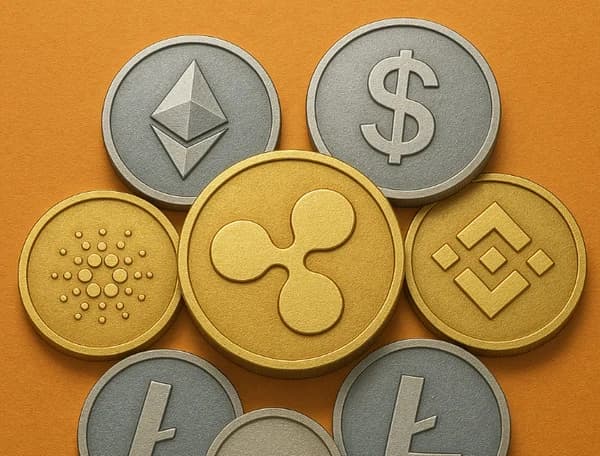
'Depeg'—the phenomenon of a stablecoin breaking away from its target price—is one of the representative risk signals in the virtual asset market, reflecting the state of trust and liquidity. Most dollar-pegged stablecoins are designed to maintain a value of one coin to one dollar, but depending on market conditions, this baseline can be temporarily shaken or collapse sharply.
■ When large-scale selling leads to a liquidity shortage
One starting point for depegs is large-scale selling. When market anxiety grows, investors simultaneously try to convert their stablecoins into cash or other assets, causing sell volume to surge. If liquidity on exchanges or decentralized exchanges (DEXs) is insufficient at that point, there may not be enough buyers to absorb the sell orders at the $1 level, and the price can be pushed downward.
■ Trust in reserves and redemption capacity
Trust in the issuer's reserves and redemption capacity is also an important variable. For fiat-collateralized stablecoins, market participants scrutinize whether assets actually exist to back the issued coins and whether holders can be properly redeemed when they wish. If uncertainty grows over the composition or custody of the reserve assets, or if problems arise with banking partners, selling can pile up on redemption concerns alone—even without any actual losses confirmed. This is why a stablecoin's price stability is tied not merely to the size of its reserves, but also to the ability to access those reserve assets.
■ Falling crypto collateral values and liquidations
Stablecoins that use crypto assets as collateral carry a different form of risk. If the price of the pledged virtual assets falls rapidly, the collateral ratio deteriorates and liquidations may occur to maintain it. In a situation where the entire market is plunging, falling collateral values and liquidations can proceed simultaneously, potentially pressuring the stablecoin's price stability as well.
■ The 'vicious cycle of trust' in algorithmic models
In structures that use algorithms to maintain the price, market trust plays an even more critical role. Some algorithmic stablecoins are designed to hold the $1 price through the issuance and burning of linked tokens or arbitrage. However, if a market shock grows large enough that the arbitrage mechanism stops functioning properly, a vicious cycle can emerge in which increased selling leads to declining trust, which in turn triggers further selling.
■ Technical risks: smart contracts and oracles
Technical problems can also trigger depegs. Stablecoins used in decentralized finance (DeFi) can be exposed to smart contract vulnerabilities, hacking, or errors in collateral management systems. If incorrect data is fed into oracles that transmit external prices to the blockchain, collateral valuation or liquidation processes may be distorted.
■ Banks, payment networks, and the regulatory environment
Banks, payment networks, and the regulatory environment should also be examined. If services at financial institutions used by the issuer are disrupted or problems arise with account access, concerns may spread in the market that redemption is difficult even though reserve assets exist. Regulatory actions or payment network failures can likewise amplify short-term price instability.
■ Judging by a single exchange's price is premature
However, caution is needed when interpreting a price deviation at a single exchange as a depeg of the stablecoin as a whole. If deposits and withdrawals are suspended or trading volume is insufficient at a particular exchange, the price can diverge significantly in that market alone. To properly assess price stability, one needs to check not only prices on major exchanges but also on-chain liquidity pools and the issuer's redemption status.
■ The key to judgment is 'structure,' not the price number
Ultimately, the key to judging a depeg does not lie in a single price figure. The following should be examined together:
▲ Whether sufficient collateral exists ▲ Whether users can be properly redeemed when needed ▲ Whether liquidity is maintained even under market stress ▲ Whether the issuance and collateral structures are transparently disclosed
A stablecoin's departure from $1 can be more than a simple price fluctuation—it can signal cracks forming in the trust and liquidity structures underpinning the asset.
[This article is provided for informational purposes to explain the structure and risk factors of the virtual asset market and does not recommend the purchase, sale, or holding of any specific virtual asset. Virtual assets carry high price volatility and the risk of principal loss, and technical or market scenarios do not guarantee actual outcomes. AI was used for data organization and sentence composition.]
CBC Globe publishes verified stories with editorial review, source checks, and tenant-specific publication standards.
Related Articles

Ripple (XRP) Surges 7.81% in 'Short-Term Momentum Recovery'... Trading Volume 1.66x Higher, Breakout Above $1.50 Is the Key Test

Bitcoin Battles Around $77,000... Trend Recovery Still Elusive Despite Short-Term Rebound; 'Breakout with Volume' Is Key