[Focus] SK hynix's Kioxia Investment Results and Shareholder Returns... Implications of Solidigm's U.S. Listing
SK hynix's global semiconductor investment performance is drawing attention in terms of shareholder returns and corporate value enhancement. In particular, some observers note that the value appreciation generated from its investment in Japan's Kioxia could be linked to shareholder return funding, w
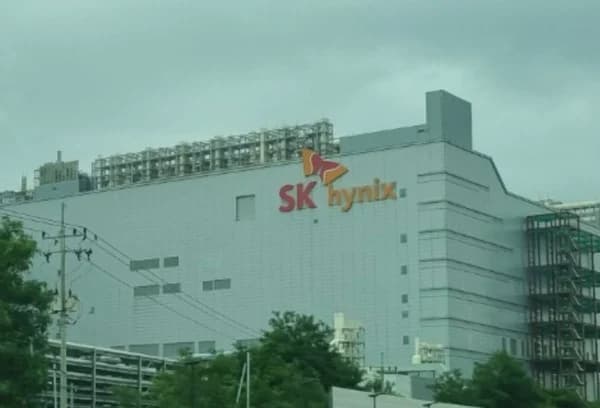
SK hynix's global semiconductor investment performance is drawing attention in terms of shareholder returns and corporate value enhancement. In particular, some observers note that the value appreciation generated from its investment in Japan's Kioxia could be linked to shareholder return funding, which means the previously controversial issue of Solidigm's listing on the U.S. stock market deserves reexamination from a new perspective. The core issue lies in how the value of overseas semiconductor assets is realized and how those gains are distributed to the parent company and its shareholders.
◆ 3 Trillion Won Investment in Kioxia... The Significance of Asset Value Appreciation
Analysts note that as large-scale facility investments and R&D competition continue in the global semiconductor market, finding a balance between subsidiaries' fundraising strategies and the protection of shareholder value is becoming increasingly important.
In 2018, SK hynix made a strategic investment in Toshiba Memory, the predecessor of Japan's Kioxia, through a Korea-U.S.-Japan consortium involving Bain Capital and others. The funds injected at the time through fund contributions and convertible bonds are known to have exceeded 3 trillion won. As Kioxia's corporate value subsequently rose, attention has focused on SK hynix's investment performance. It is regarded as significant in that a long-term investment in a foreign semiconductor company led to asset value appreciation.
In particular, if the value appreciation of investment assets is realized as actual profits and can be linked to shareholder return policies such as dividends or share buybacks, it can create a structure in which the company's investment performance flows back to shareholders. This demonstrates that value creation by a semiconductor company is not limited to operating profits from existing businesses such as DRAM and NAND flash. Global corporate acquisitions and strategic equity investments can also serve as long-term means of enhancing corporate value.
However, a distinction needs to be made between valuation gains on investment assets and cash secured through actual sales. The extent to which investment performance translates into shareholder returns may vary depending on the timing of stake disposal, financial strategy, and board decisions.
◆ Solidigm's U.S. Listing... Renewed Attention on the Dual-Listing Controversy
Against this backdrop, Solidigm is a case drawing renewed attention. Solidigm is a U.S. semiconductor company established when SK hynix acquired Intel's NAND flash business. It conducts business centered on enterprise solid-state drives (eSSDs), and its growth potential is drawing attention amid the expansion of the artificial intelligence (AI) data center market.
Solidigm's plan to list on the U.S. stock market attracted interest because it would allow the overseas subsidiary's corporate value to be assessed in the global capital market and the funds raised to be used for business expansion. However, as wariness of dual listings grew in the domestic capital market, Solidigm's listing also became a subject of controversy.
The core of the dual-listing controversy is the concern that the corporate value held by the parent company's shareholders could be diluted in the subsidiary's listing process, or that valuing the core business separately could negatively affect the parent company's share price. In contrast, Solidigm differs in that it was not created by spinning off an existing core business of SK hynix, but was established by acquiring a business unit of a foreign company. Considering this business formation process and fundraising purposes, some argue that rather than judging all subsidiary listings by the same standards, the characteristics of each company and their impact on shareholder value should be comprehensively reviewed.
◆ Expert: 'A Flexible Approach Is Needed'... IPO Funds to Be Invested in eSSD and R&D
Some analyses emphasize the positive effects of a Solidigm listing. Masahiro Wakasugi, senior industry analyst at Bloomberg Intelligence (BI), stated in a media interview that a flexible approach is needed rather than overly strict restrictions on dual listings.
He noted that Solidigm has established an independent operational structure based on the U.S. business acquired from Intel. He also analyzed that if large-scale funds are raised through an initial public offering (IPO), they could be invested in expanding eSSD production capacity and in R&D, while parent company SK hynix could reduce its direct investment burden and concentrate resources on core areas such as high-bandwidth memory (HBM).
He also presented an analysis that even if SK hynix sells a portion of its Solidigm stake to outside investors, the impact on its earnings per share (EPS) could be limited. This perspective suggests that a subsidiary listing does not necessarily bring only unfavorable outcomes for the parent company's shareholders. Of course, challenges remain, such as closely examining how much of the subsidiary's post-listing growth performance can flow back to the parent company's shareholders and what impact changes in equity stakes may have.
◆ Kioxia vs. Solidigm... The Common Question Is 'Value Realization'
Kioxia and Solidigm differ in investment structure and business character. Kioxia represents a strategic equity investment, whereas Solidigm is a subsidiary operated on the basis of a business acquired by SK hynix. Therefore, the success of the Kioxia investment does not directly prove the viability of a Solidigm listing.
Nevertheless, the two cases raise the common question of how to utilize the value of global semiconductor assets. While the Kioxia investment is significant in terms of long-term asset value appreciation and realization of investment performance, Solidigm's listing plan can be seen as a strategic option to secure growth funds for the overseas subsidiary and adjust the parent company's investment burden.
In particular, as memory semiconductor companies' investment needs increase amid the expansion of the AI industry, fundraising methods utilizing global capital markets are expected to remain an important management challenge. Some point out that an approach considering both the company's strategic autonomy and the rights of existing shareholders is needed in this process.
◆ Ultimately, What Matters Is the 'Structure for Sharing Performance with Shareholders'
The controversy over Solidigm's U.S. listing is an issue where two tasks intersect: the company's fundraising strategy and the protection of shareholder value. Investors' concerns about subsidiary listings warrant thorough consideration. At the same time, there is also room for debate over whether it is appropriate to uniformly interpret a company's strategic choices to secure growth funds for businesses acquired overseas as dual-listing problems.
In particular, the semiconductor industry is a field where large-scale upfront investments and technological competitiveness determine a company's long-term performance. Judgments on capital-raising methods should also take into account not only short-term share price effects but also investment efficiency, business growth potential, and long-term shareholder value.
The situation in which the Kioxia investment performance is leading to shareholder return discussions prompts renewed reflection on the significance of realizing the value of global investment assets. Solidigm can also draw on this perspective when reviewing its future corporate value and fundraising strategy. Ultimately, what matters is not the listing itself, but whether the strategy enhances the company's competitiveness and establishes a structure for reasonably sharing those gains with existing shareholders.
CBC Globe publishes verified stories with editorial review, source checks, and tenant-specific publication standards.
Related Articles

Woori Technology Shares Surge 5.13% as Dynamic VI Triggered; Correction Filing on Doosan Enerbility DCS Supply Contract Draws Attention

Doosan Fuel Cell Q3 Results: Revenue Up 59.9%... Operating Loss of 17 Billion Won, Deficit Widens Year-on-Year

[Breaking] LG Chem Decides to Sell 2.5 Trillion Won Worth of LG Energy Solution Shares, Reducing Stake to 76.59%