Trump Says Iran "Like a Chess Game"… Pledges Continued Economic Pressure Over Military Response
U.S. President Donald Trump has made clear his intention to maintain economic pressure on Iran rather than launch additional military attacks, even as Tehran sets tough conditions for reopening the Strait of Hormuz. In a phone call with the U.S. online media outlet Axios on the 9th (local time), Pr
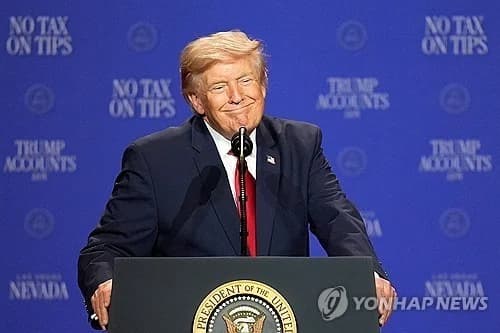
U.S. President Donald Trump has made clear his intention to maintain economic pressure on Iran rather than launch additional military attacks, even as Tehran sets tough conditions for reopening the Strait of Hormuz.
In a phone call with the U.S. online media outlet Axios on the 9th (local time), President Trump addressed the Iran situation, stating, "We are responding with patience." He explained that while dialogue with Iran has not completely broken down, it has not yet reached the stage of full-scale negotiations.
He pointed out that Iran's economy is in severe crisis. "We are just watching Iran's situation, where they are suffering from massive inflation and have no money," he said, claiming that Iran is so short of funds it cannot even pay its own soldiers. He also noted that the U.S. naval blockade against Iran has further worsened the regime's economic difficulties.
He also explained that international oil prices have fallen to slightly above $75 per barrel, easing the burden on American consumers from the war. Regarding the state of negotiations with Iran, President Trump expressed optimism, likening it to a chess game: "It will work out well. It always does. This is like a chess game." He offered no particular complaints or threats regarding the possibility of a new military strike against Iran or the delay in announcing an agreement to reopen the Strait of Hormuz with Oman.
Axios reported that President Trump indicated his readiness to intensify economic pressure rather than pursue additional military strikes, despite Iran's hardline demands.
Iran Sets Six Conditions for Reopening the Strait of Hormuz
Against this backdrop, Iran formally presented six conditions the previous day for reopening the Strait of Hormuz.
Mohammad Baqer Zolqadr, Secretary-General of Iran's Supreme National Security Council, outlined the demands through Iranian state media on the 8th (local time): the lifting of the U.S. naval blockade against Iran, the withdrawal of U.S. forces from areas near Iran, compensation for war damages, the unfreezing of Iranian assets, the removal of sanctions against Iran, and the cessation of attacks, threats, and insults directed at Iran and its allies. Zolqadr stated that unless the United States accepts these demands, the Strait of Hormuz will not be reopened.
Iranian Foreign Minister Abbas Araghchi also met with reporters in Tehran, explaining that mediator countries are working to lay the groundwork for resuming negotiations. However, he stressed that talks cannot resume unless the United States halts its violations of the memorandum of understanding (MOU) on the cessation of hostilities and provides compensation for those violations.
Negotiation Prospects Again Uncertain
President Trump previously called off a large-scale military strike against Iran on the 1st of this month at the request of Middle Eastern nations and urged a swift agreement to reopen the Strait of Hormuz. Subsequent negotiations between Iran and Oman appeared to be making progress, but the situation has become uncertain again with Iran's new set of conditions.
The United States and Iran have so far failed to reach an agreement on the full reopening of the Strait of Hormuz and denuclearization discussions. With Iran recently putting forward new demands, the outlook for negotiations between the two countries has once again become uncertain.
CBC Globe publishes verified stories with editorial review, source checks, and tenant-specific publication standards.
Related Articles
Han Byung-do: "Housing Supply Delays, Responsibility of Previous Administration and Opposition"… Jang Dong-hyuk Criticizes "Government That Abandoned the People"
Film "Assassin(s)" Director Heo Jin-ho: "The 1974 First Lady Sniper Incident Portrayed with a Balanced Perspective"
Up to 200 Homeless Evicted from Incheon Airport Amid Heatwave... Human Rights Groups Protest, Calling It "A Threat to Survival"