Gold Prices Rise on August 15... Pure Gold Buy Price at 874,000 Won; US Inflation and Rate Outlooks Make Dollar and Central Bank Demand Key Variables
On August 15, 2026, prices for pure gold, 18K and 14K gold, platinum, and silver all closed higher at the Korea Gold Exchange. The pure gold price (Gold24k-3.75g) rose 8,000 won (0.92%) from the previous day to 874,000 won for buying, while the selling price climbed 4,000 won (0.55%) to 731,000 won
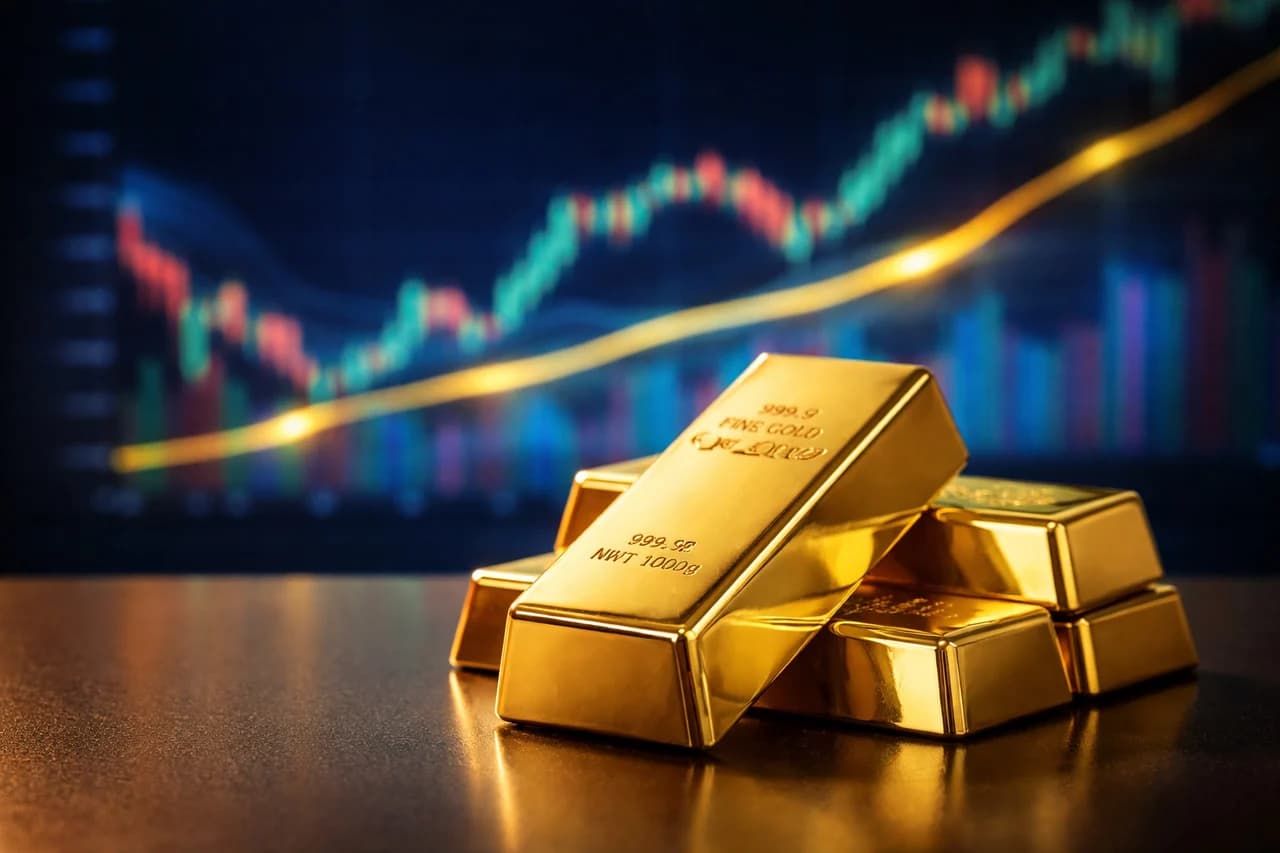
On August 15, 2026, prices for pure gold, 18K and 14K gold, platinum, and silver all closed higher at the Korea Gold Exchange.
The pure gold price (Gold24k-3.75g) rose 8,000 won (0.92%) from the previous day to 874,000 won for buying, while the selling price climbed 4,000 won (0.55%) to 731,000 won.
The 18K gold price (Gold18k-3.75g) rose 2,900 won (0.54%) from the previous day to 537,300 won for selling, while the 14K gold price (Gold14k-3.75g) increased 2,300 won (0.55%) to 416,700 won for selling.
The platinum price (Platinum-3.75g) recorded 347,000 won for buying (up 4,000 won, or 1.15%, from the previous day) and 282,000 won for selling (up 4,000 won, or 1.42%). Silver (Silver-3.75g) traded at 12,190 won for buying (up 40 won, or 0.33%) and 10,300 won for selling (up 40 won, or 0.39%).
■ US Stocks Weaken... Focus Shifts from Inflation Data to 'Rate Outlook'
Meanwhile, on August 14 (local time), the three major US stock indices closed lower. The Dow Jones, Nasdaq, and S&P 500 failed to extend the previous session's rally on the 13th and ended the day in decline.
Recent financial market attention has focused less on the level of inflation figures themselves and more on how those figures might reshape the outlook for US interest rates.
According to the US Bureau of Labor Statistics, the Producer Price Index (PPI) for July rose 4.7% year over year. The index excluding food, energy, and trade services also climbed 4.7% over the same period. With the previously released July Consumer Price Index (CPI) added to the picture, market debate continues over the inflation trajectory and the Federal Reserve's (Fed) future policy moves.
■ Gold Prices Move on a Complex Mix of Rates, Real Yields, and the Dollar
This environment could affect not only the New York stock market but also the gold market. Rather than simply tracking whether inflation is rising, gold prices are influenced by a complex set of financial market variables, including US Treasury yields, real interest rates, and the dollar's value.
Since gold itself generates no interest, expectations of lower interest rates reduce the opportunity cost of holding it, while expectations that high rates will persist for an extended period can weigh on gold prices.
The dollar's movement is another factor to watch. Because international gold prices are denominated in dollars, changes in the dollar's value can influence gold demand and price formation outside the United States. Ultimately, even with the same inflation figures, gold's reaction may differ depending on whether the market reads them as a signal of greater rate-cut potential and a weaker dollar, or conversely as evidence that tight monetary policy will last longer than expected.
■ Central Bank Demand and Geopolitical Risk Also in Play
Adding to this, gold market-specific supply and demand factors—such as central bank gold purchases and geopolitical uncertainty—remain variables. The Bank of Korea recently disclosed that it held 350 billion won worth of gold ETFs in the second quarter of this year.
Gold is an asset that attracts funds during periods of heightened financial market volatility while also serving as a foreign reserve asset for central banks around the world, giving it a demand structure distinct from that of stocks or bonds. Therefore, it is difficult to determine the direction of gold prices solely on the grounds of stock market strength.
[This article is by no means a solicitation for investment. All investments are made at each individual's own discretion and judgment, and the final responsibility lies with the investor.]
CBC Globe publishes verified stories with editorial review, source checks, and tenant-specific publication standards.
Related Articles
Samsung Electro-Mechanics Now Overlaps with Bill Gates' 'Natrium' Nuclear Moves... Attention Turns to AI Power Infrastructure Scalability — What Is the True One-Pick?
Alteogen Shares Close Lower at 314,000 Won Despite KOSDAQ Strength... 'Defense of 300,000-Won Level' Key on the 18th
Kolon TissueGene Rises for 6th Consecutive Trading Day... Can It 'Reclaim the 30,000-Won Level' on the 18th After the Holiday?