
International Oil Prices Surge 5% Amid Stalled US-Iran Negotiations... Strategic Petroleum Reserves Hit 43-Year Low
As negotiations between the United States and Iran over the reopening of the Strait of Hormuz reached a stalemate, concerns over supply disruptions intensified, causing international oil prices to surge by more than 5%. Military tensions in the Middle East and threats to energy facilities in Russia
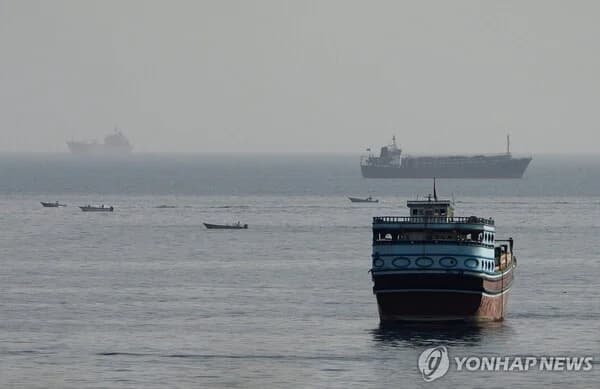
As negotiations between the United States and Iran over the reopening of the Strait of Hormuz reached a stalemate, concerns over supply disruptions intensified, causing international oil prices to surge by more than 5%. Military tensions in the Middle East and threats to energy facilities in Russia and Yemen have compounded the situation, while the decline of US Strategic Petroleum Reserves to their lowest level in 43 years is adding pressure to the market due to diminished buffer capacity.
Strategic Petroleum Reserves at Lowest Since January 1983... "Buffer Capacity Reaching Its Limit"
According to data from the US Department of Energy, the US Strategic Petroleum Reserve (SPR) fell by 6.1 million barrels last week to 298.7 million barrels, marking its lowest level since January 1983. Bloomberg noted that slowing Chinese crude demand and the release of US emergency reserves had sustained the market until recently, but the buffer capacity has now reached its limit.
Brent Crude Closes Up 5.0%... WTI Also Surges 5.1%
On the 10th (local time), October-delivery Brent crude futures on the ICE Futures Exchange closed at $87.72 per barrel, up 5.0% from the previous trading day. September-delivery West Texas Intermediate (WTI) futures on the New York Mercantile Exchange also rose 5.1% to $82.13 per barrel. With oil prices jumping more than 5%, WTI traded in the $82 range and Brent in the $84 range.
US-Iran Negotiations Stall... Iran's Six Demands vs. Trump's Rebuttal
Concerns over supply disruptions stemmed from the deadlock in negotiations between the US and Iran over the reopening of the Strait of Hormuz. Iran presented six demands that were far more hardline than the ceasefire memorandum of understanding (MOU) signed in June. Specifically, Iran demanded the lifting of the US naval blockade, the withdrawal of US troops, a permanent cessation of attacks, compensation for war damages, the lifting of sanctions against Iran, and the unconditional release of frozen assets. In response, President Trump countered that Iran should instead compensate for past terrorism and the killing of protesters. The ongoing standoff between the US and Iran has weakened expectations for a negotiated settlement.
Simultaneous Supply Chain Threats in the Middle East and Russia... Military Tensions Escalate
Military tensions are also escalating. Yemen's Houthi rebels claimed to have attacked an Aramco refinery in the Jizan region of Saudi Arabia, and a vessel from the UAE's state-owned oil company was attacked while passing through the strait. Energy facilities in Nizhnekamsk, in Russia's Republic of Tatarstan, also came under Ukrainian drone attack. Threats to energy supply chains are continuing in both the Middle East and Russia.
Wall Street diagnosed that current oil prices are fluctuating between expectations for a deal and geopolitical risks. Capital Economics analyzed that while negotiation expectations are keeping oil prices suppressed in the $80–90 range, a risk premium could surge if talks collapse or supply chain risks materialize.
Trump Extends Jones Act Waiver for Additional 90 Days... Limited Market Impact
Despite the surge in oil prices, President Trump's additional 90-day extension of the Jones Act waiver had little impact on the market. The Jones Act mandates that only US-built and US-owned vessels can transport cargo between US ports. After granting an initial 60-day waiver on March 18 and a 90-day extension in late April, President Trump has now extended it for another 90 days, meaning the waiver will remain in effect beyond the November midterm elections.
US Treasury Yields Rise in Tandem... Probability of September Rate Hike Exceeds 51%
Along with rising international oil prices, US Treasury yields also climbed. Based on the Chicago Mercantile Exchange, the probability of a rate hike in September surpassed 51%. Looking at the yield curve, the 2-year Treasury yield stood at 4.24%, the 10-year at 4.7%, and the 30-year at 5.25%.
On the same day, the New York stock market broadly declined, dragged down by weakness in semiconductor stocks such as Intel and Nvidia. The Philadelphia Semiconductor Index fell 2.9%, and the Nasdaq also dropped 0.3%.
Jackson Hole Meeting, Nvidia Earnings, and July CPI Are Key Variables in August
In the August market, Nvidia's earnings report scheduled for the 26th and the Jackson Hole meeting from the 27th to the 29th are cited as the biggest variables. The options market expects S&P 500 index volatility to be highest during this period. Attention is focused in particular on whether the Jackson Hole meeting can calm the surging Treasury yields.
At last July's FOMC meeting, when Fed Chair Powell showed an ambiguous stance on price stability, long-term bond yields surged, causing significant market turmoil. Bank of America described this as a credibility shock more typical of emerging-market central banks, and The New York Times noted that Chair Powell needs to overcome this credibility crisis at the upcoming Jackson Hole meeting. In contrast, the Brookings Institution interpreted Powell's ambiguity as a signal that the Fed would be cautious about raising rates. A precedent was also noted where gold prices jumped nearly 10% when the Fed hinted at the possibility of rate cuts while mentioning labor market weakness at last year's Jackson Hole meeting.
This month, Middle East developments, the Jackson Hole meeting, and the release of July CPI data are expected to serve as the key variables for the market.
CBC Globe publishes verified stories with editorial review, source checks, and tenant-specific publication standards.
Related Articles

Gyeongsan Apartment Arson Death Toll Rises to 4... Woman in Her 50s Receiving Treatment Ultimately Dies

Kim Yong-bin Challenges for 5th Consecutive 1st Place on UPICK 'K Best Singer - Trot No.1'… Winner to Receive Konkuk Univ. Station Billboard Advertising Rights

JTBC Reveals First Teaser for 'Divine Bead'... Depicts the Desperate Resistance of a 1258 Goryeo Escort Squad